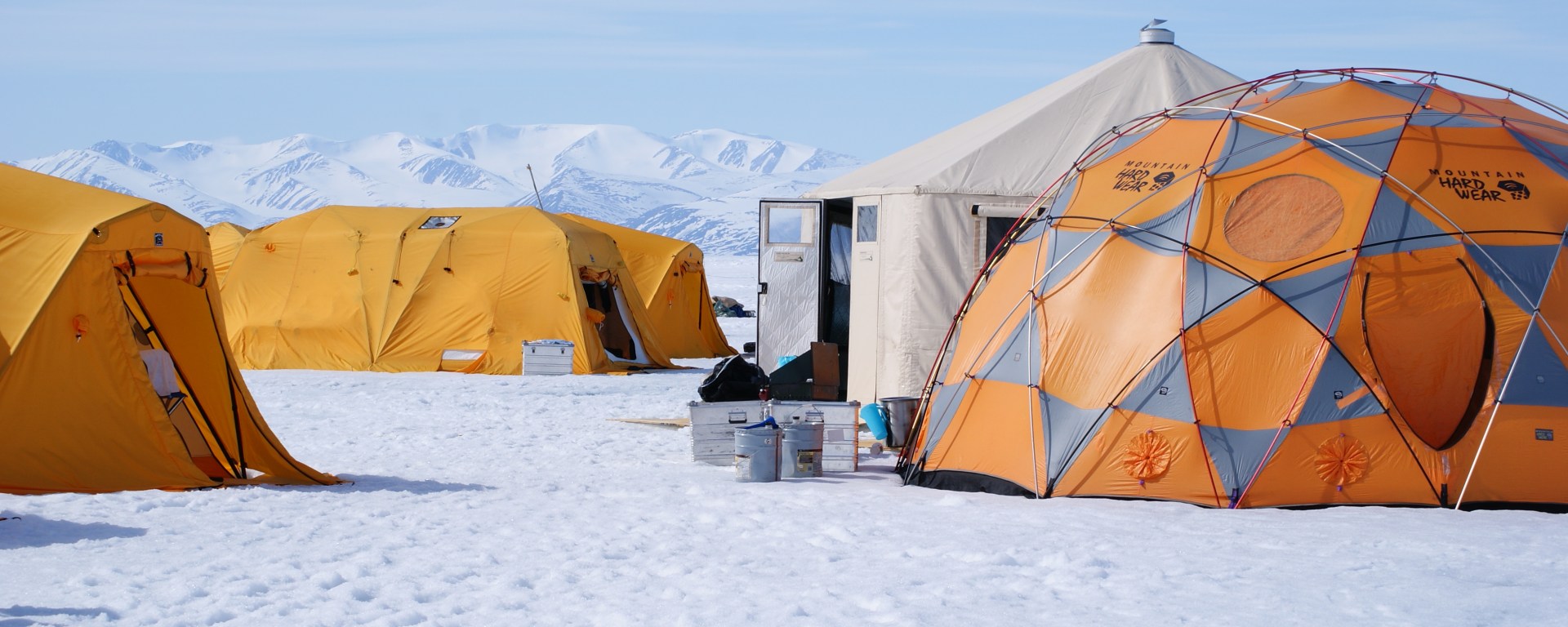
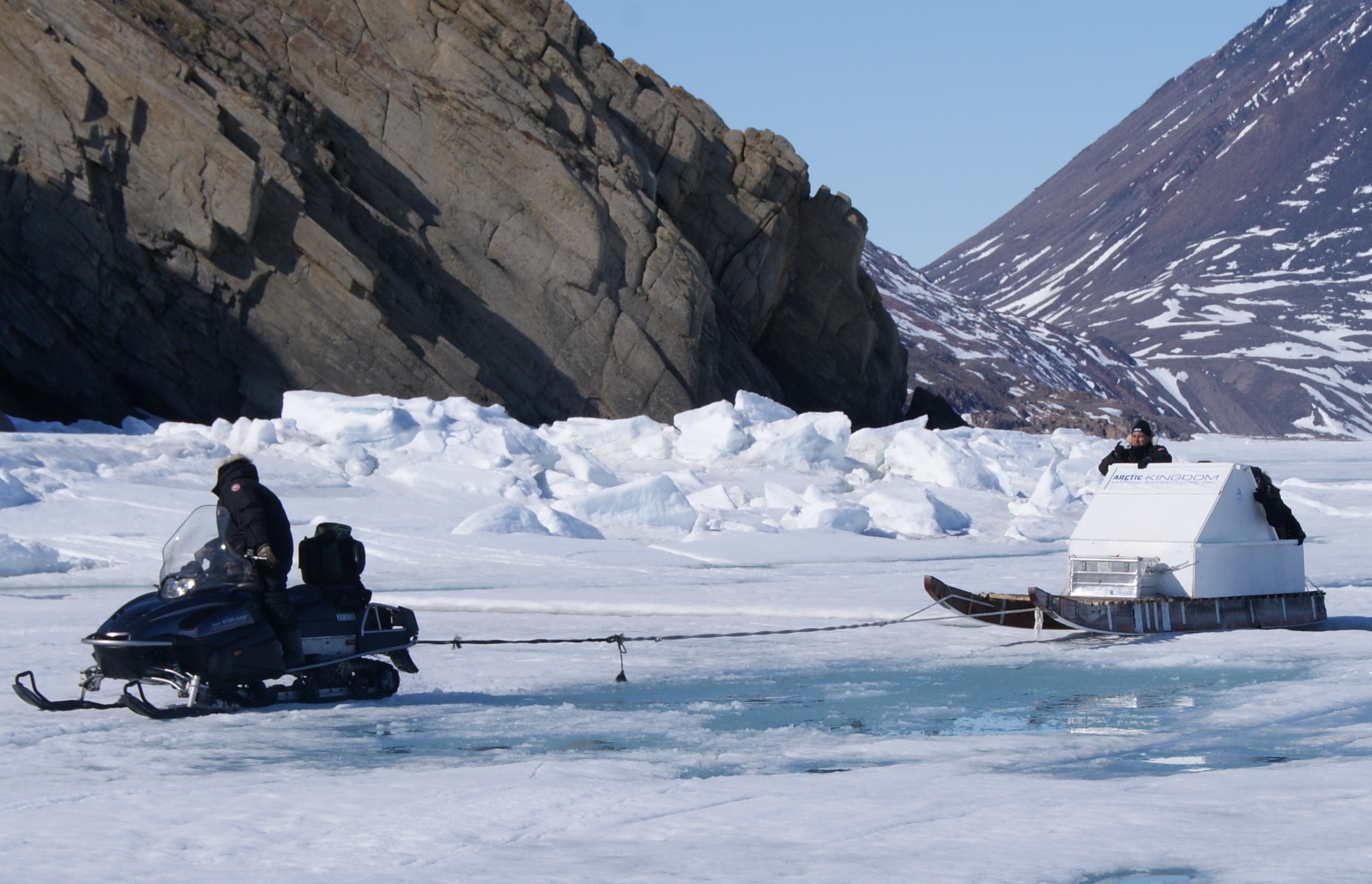
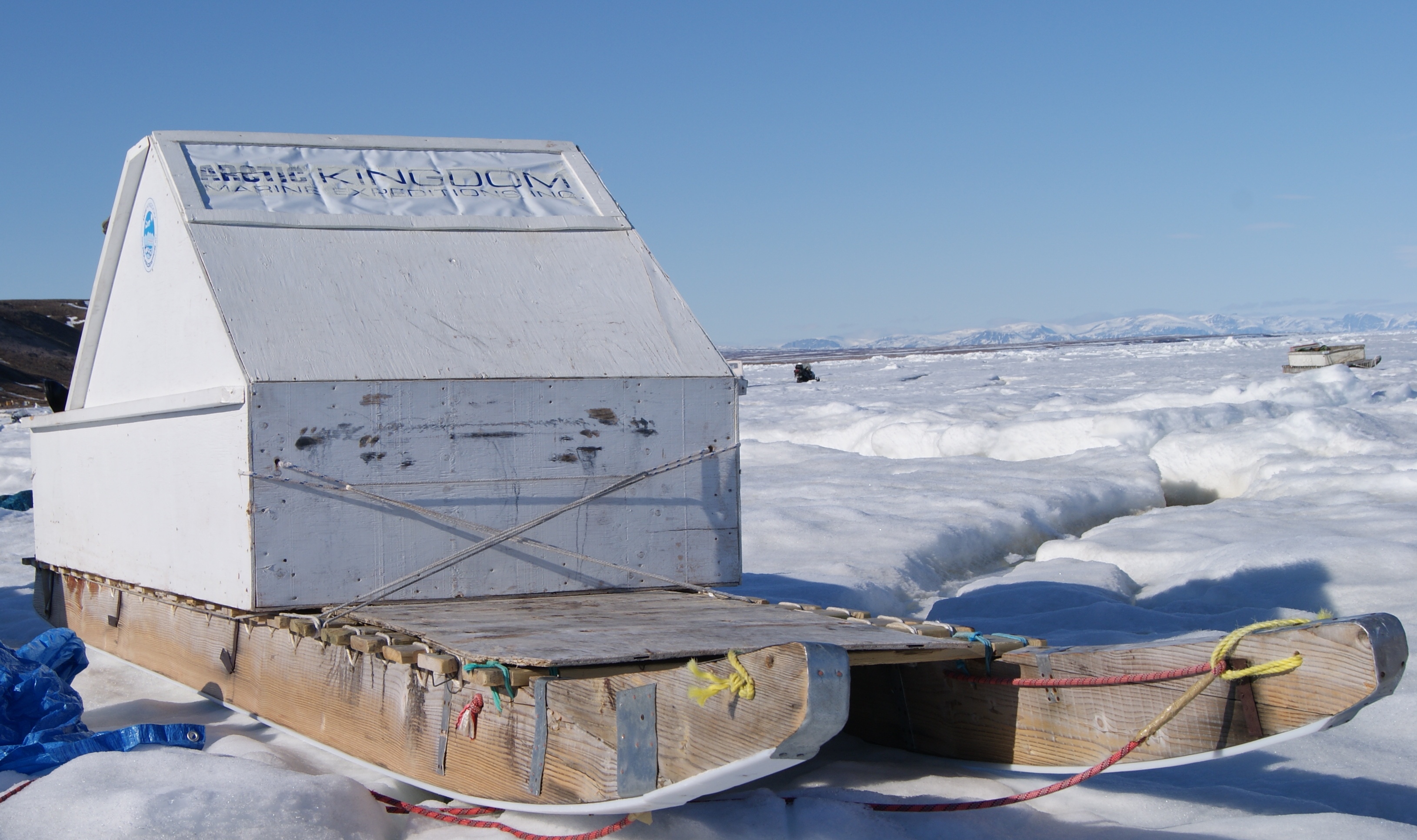
Three hours after we had left Pond Inlet, a small Inuit community at the top of Baffin Island, Nunavut, Canada we arrived at our very luxurious camp on the floe edge. It had been an exciting but extraordinarily uncomfortable trip sitting in a qamutik (traditional Inuit wooden sledge) being towed by a snowmobile for five hours.
We were about 60 kilometres out over the sea off Pond Inlet on the floe edge. The camp came in to view like a mirage, in the middle of nowhere at 73 degrees north sitting on a stretch of ice, everywhere was watery and white.
We were on a photography trip looking for Polar Bears and Narwhal mostly. But also to experience the fantastic scenery and icebergs in this short window of time between winter and the ice melting completely.
The floe is a flat chunk of floating sea ice. The floe edge is the point where the floe that is attached to the land, but still moves up and down with the tide, meets the sea. It’s a dynamic and constantly changing environment with cracks forming all the time. These have to be navigated by the snowmobile drivers who seem to be very adept at maneuvering the qamutiks across the sometimes rather wide cracks at hold your breath high speeds.
Our camp also has to be checked constantly to make sure its not slowly floating away.
One of our lovely old Inuit guides told us that whenever he goes out hunting a long way out onto the floe he takes dogs rather than a snowmobile.
They can find their way home.
He had been born in an igloo, his father had to go out onto the ice to hunt and didn’t want to leave his mother behind at nine months pregnant, so she travelled with him and each night he built an igloo for her to sleep in.
He remembers many times taking his dogs across to Greenland on the ice floe. Sometimes he would end up on a piece of ice that had broken free, but the dogs always managed to get him back home somehow. Mind you, one time he was so hungry he ate his leather gloves….
The temperature in June is a pretty comfortable 0 degrees celsius most of the time with no wind and 24 hours of daylight. Our warm and comfortable tents with plywood floor and super warm sleeping bags on army style stretchers were set about fifty metres back from the sea, so that any animals on the prowl (!!) had room to hunt along the floe edge.

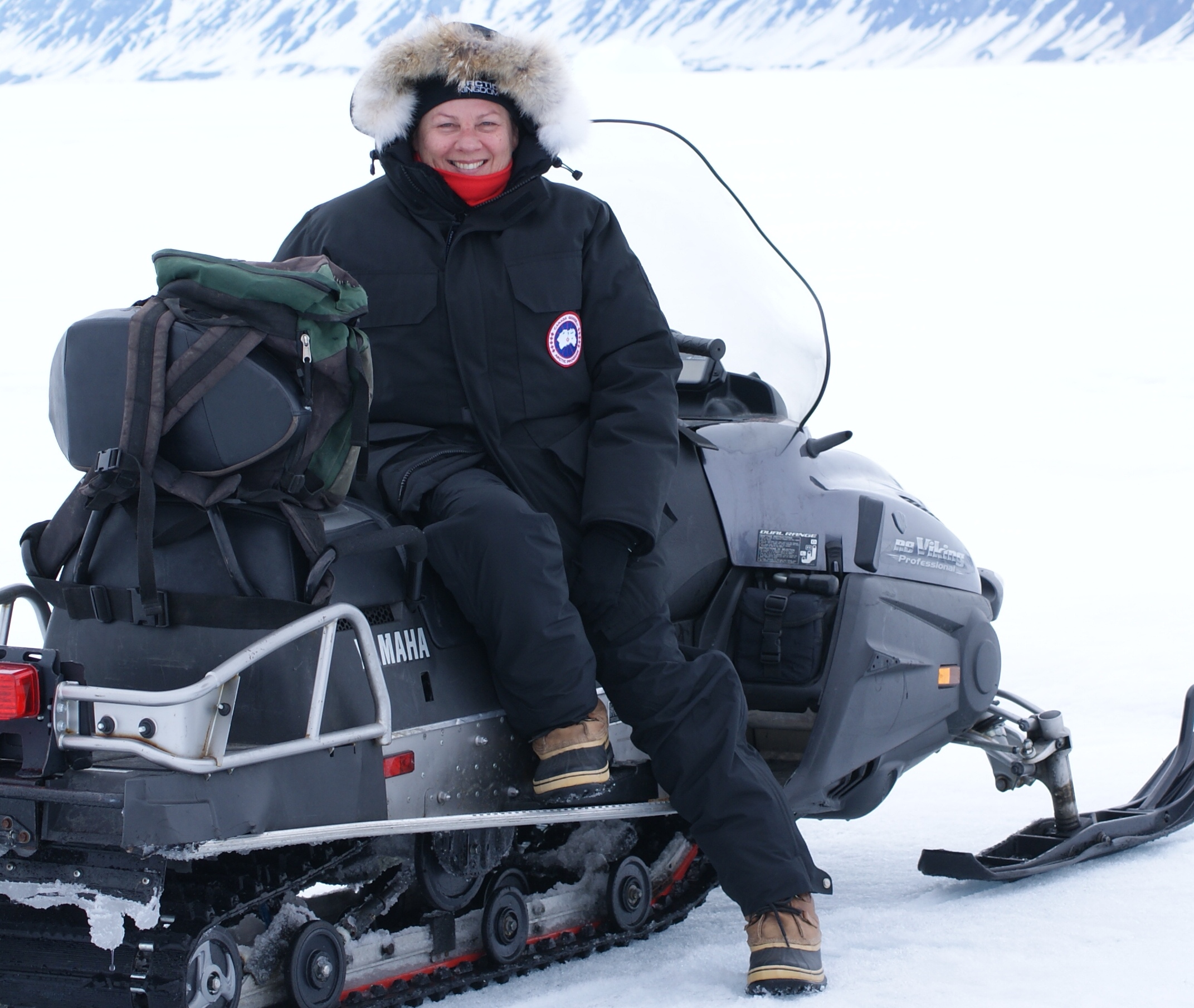
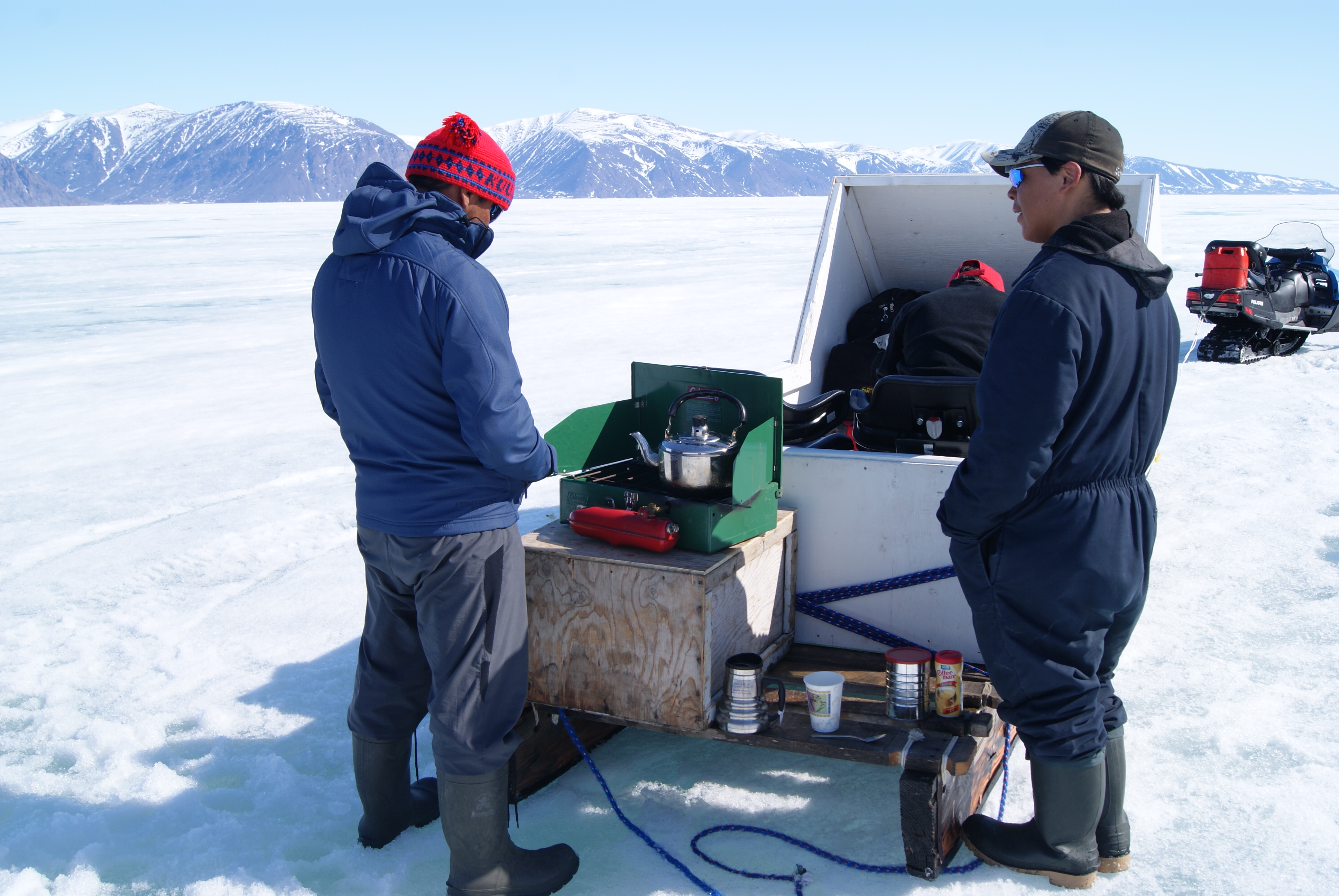
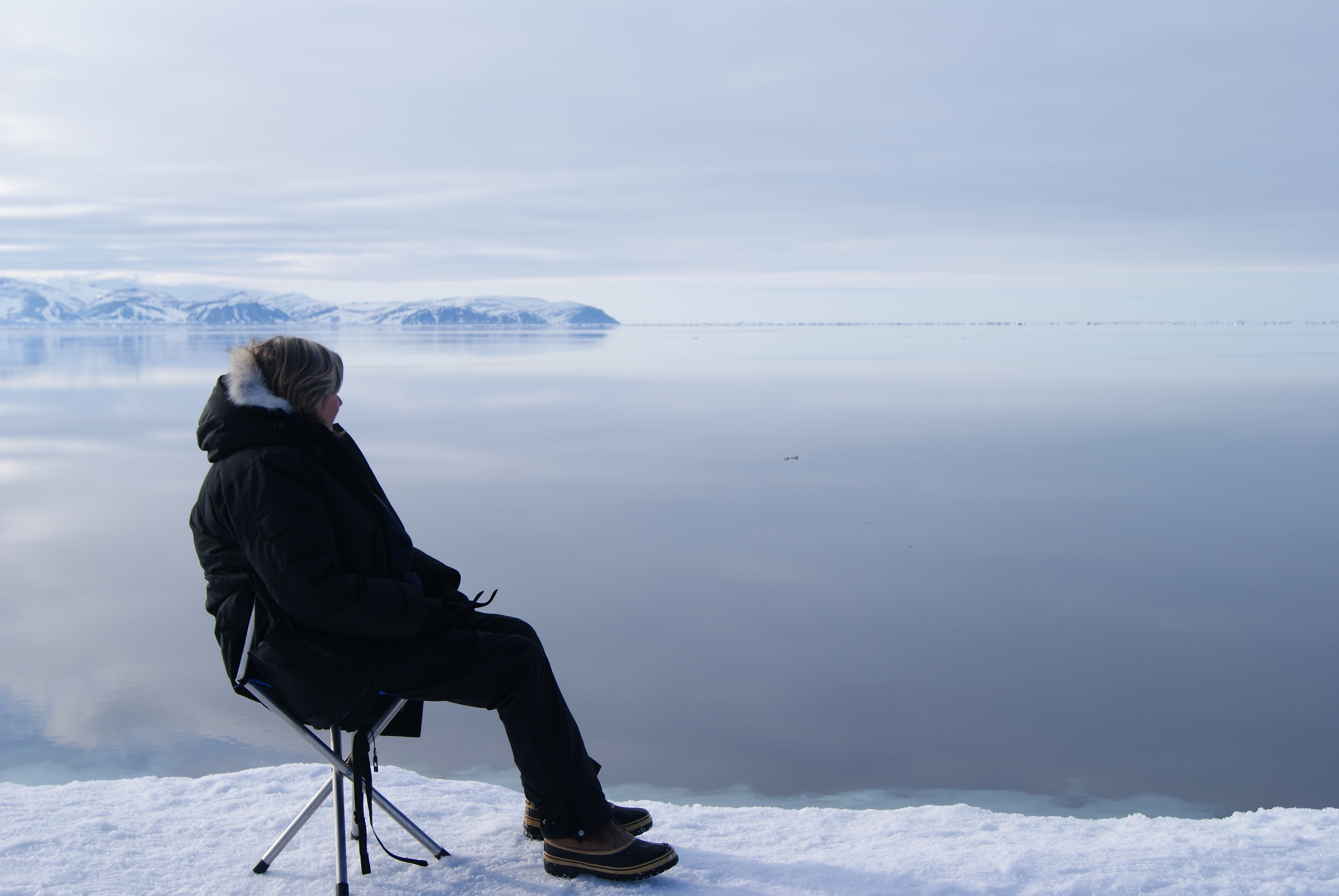
The toilet tent was a little way from the accomodation, away from the edge which was fine except in the middle of the night. Bright daylight at 2am is a weird, spooky, other worldly feeling. There was the knowledge you were being watched by the Inuit guard with his rifle on one hand and the possibility of being watched by a polar bear on the other hand. It was best to just run and hope for the best.
Sitting right out on the floe edge with Bylot Island, which is a migratory bird sanctuary over the water in the distance, we had a microphone in the crystal clear water as we listened to the whales talking in the distance it was so quiet and still.
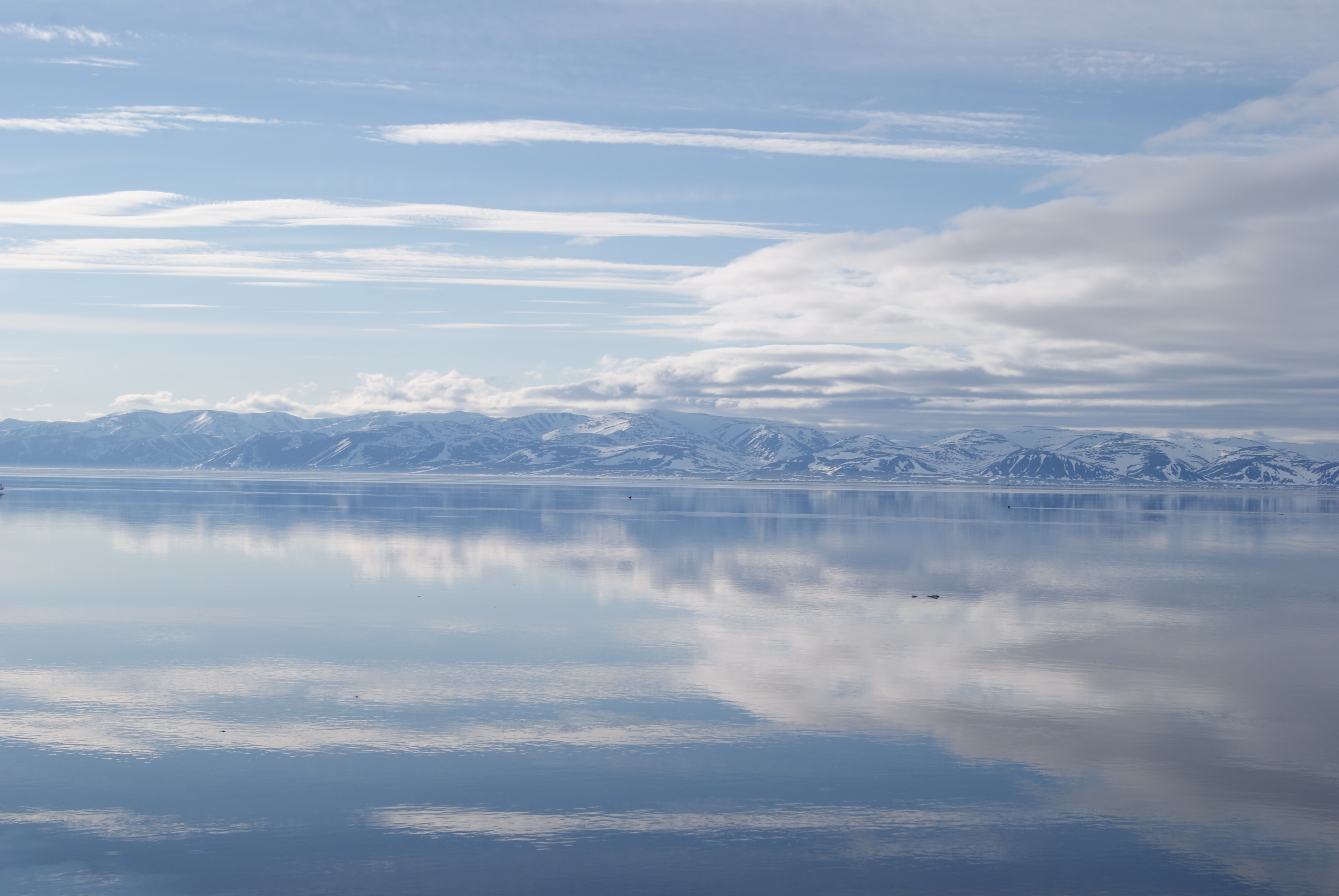
We did see polar bears, but only at a distance and now I know that narwhal are just as elusive.
But what an experience.
 TRAVELS PAST & PRESENT