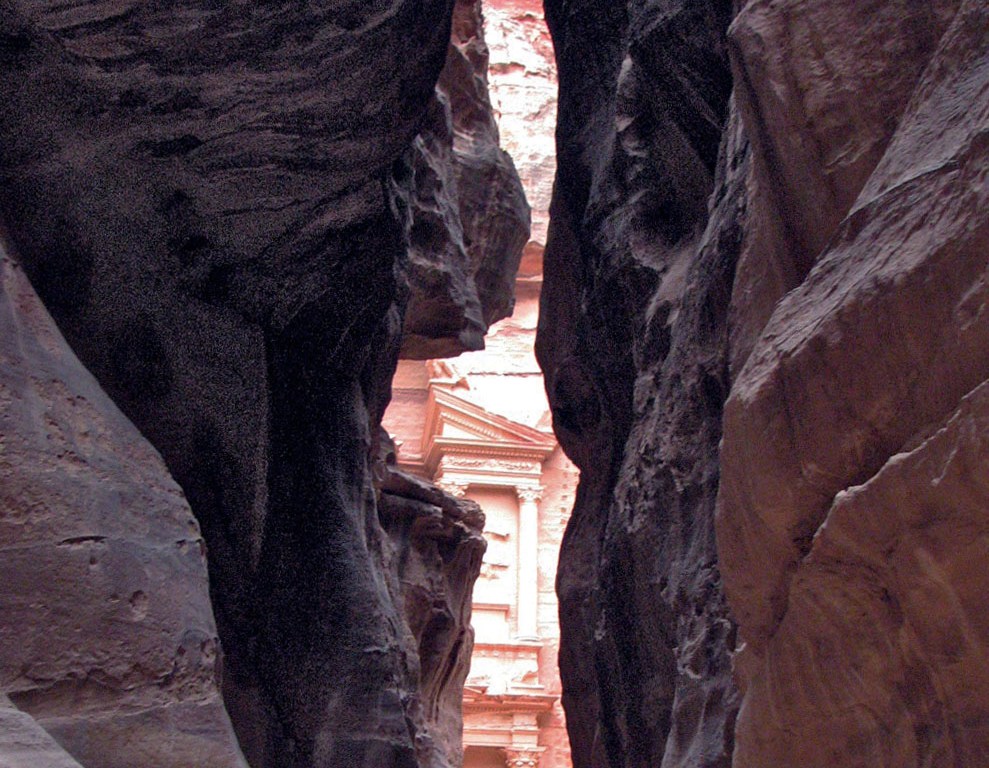
The anticipation of walking the 1.2 kilometre gorge called the siq down into Petra, Jordan, waiting to get that first glimpse of the Treasury is excruciating. At times the siq is dark and narrow and you know that it is a pathway for flash floods……
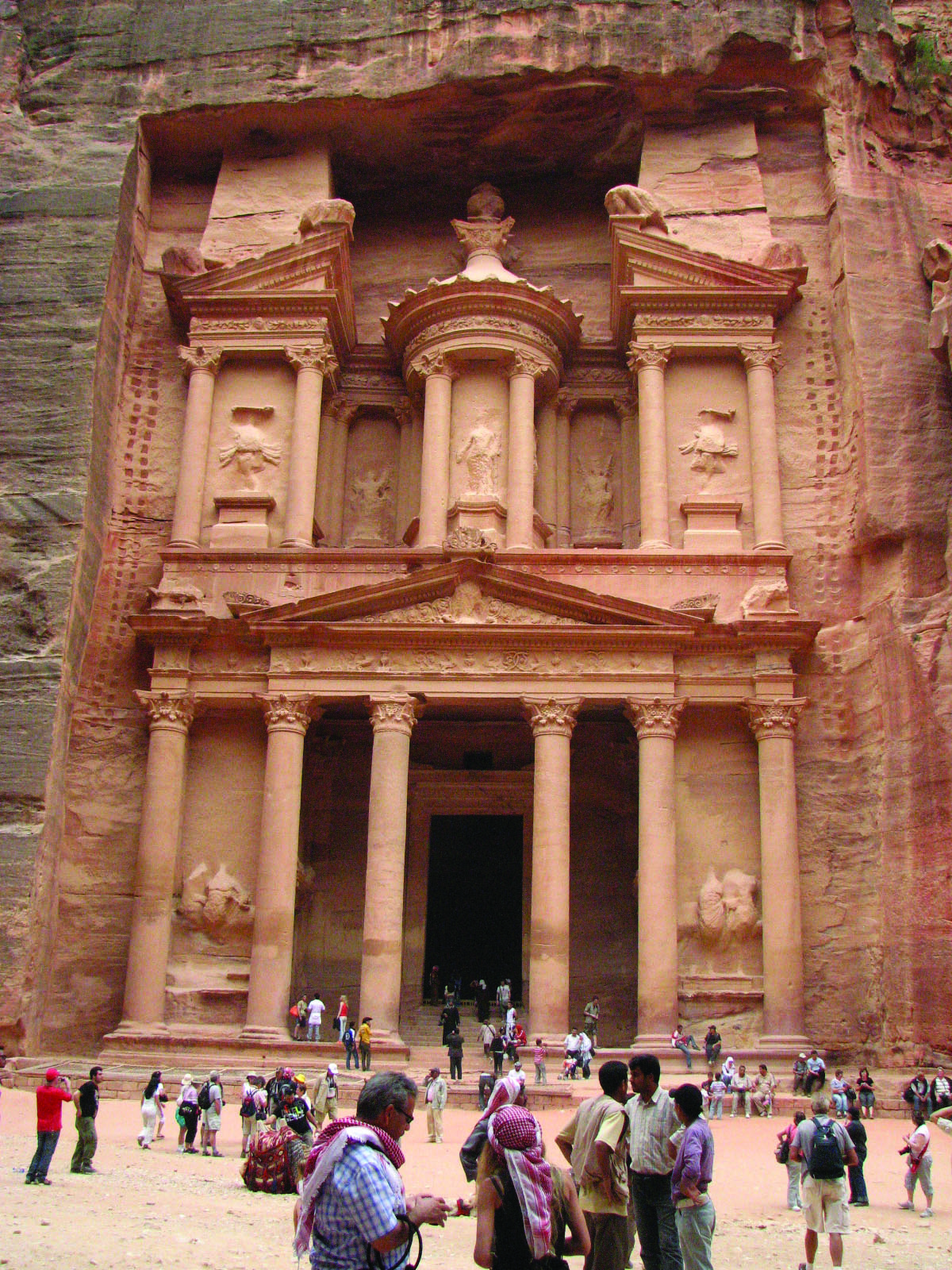
When you do finally see the treasury peeking through the narrow gap in the rock it is truly mesmerizing – it is impossible to imagine anyone carving out a building from a solid sandstone rockface at any time let alone 2,000 years ago. Where would you start? Well, apparently you start at the top!
Anyway, we have arrived in Petra. It is calm and hot, people are almost whispering at the majesty of this beautiful building in the middle of what seems like nowhere. The Treasury is believed to have been the mausoleum of the Nabataean King Aretas IV in the 1st century AD. It became known as “Al-Khazneh” or The Treasury, in the early 19th century by the area’s Bedouins as they had believed it contained treasures.
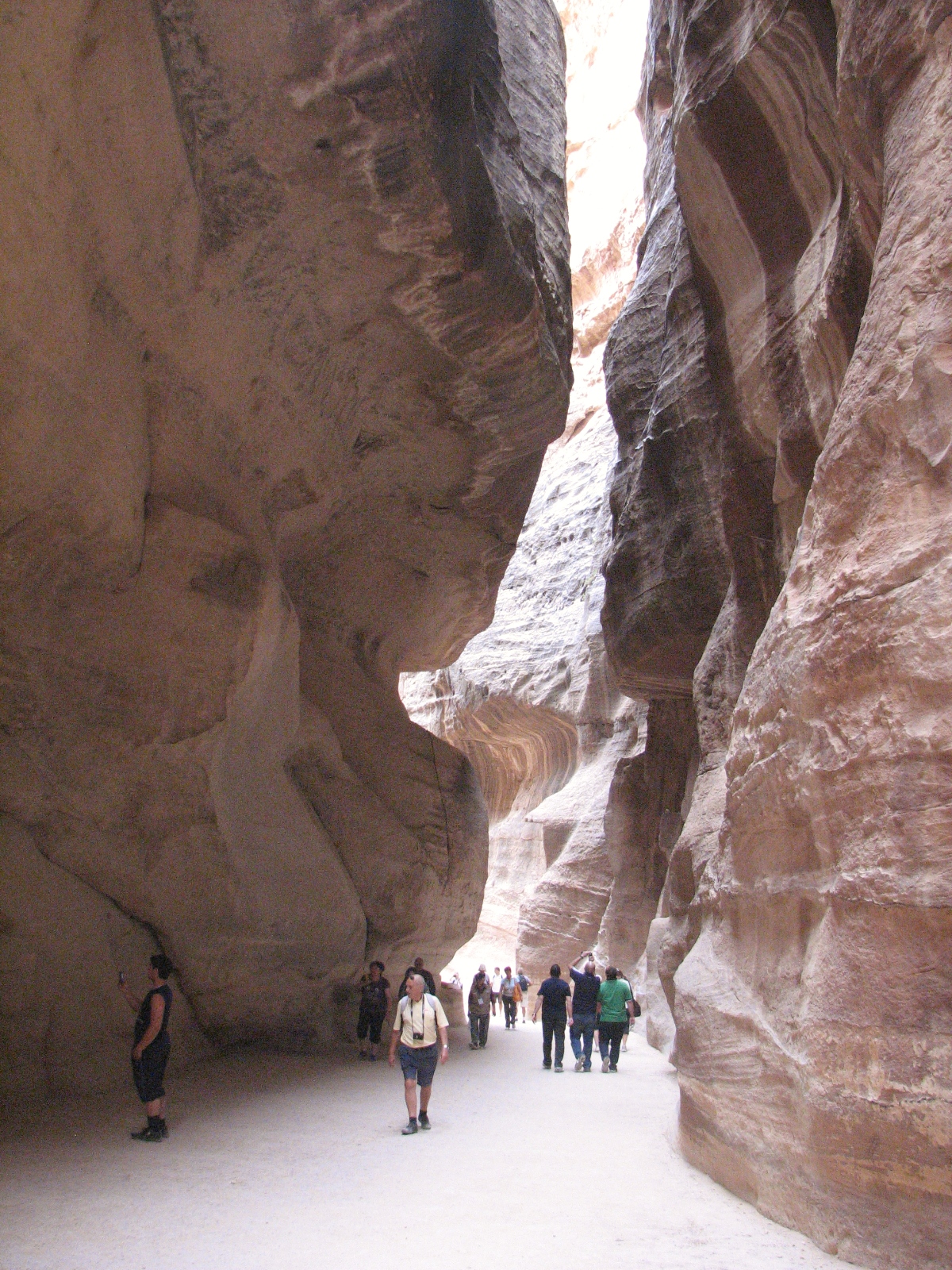
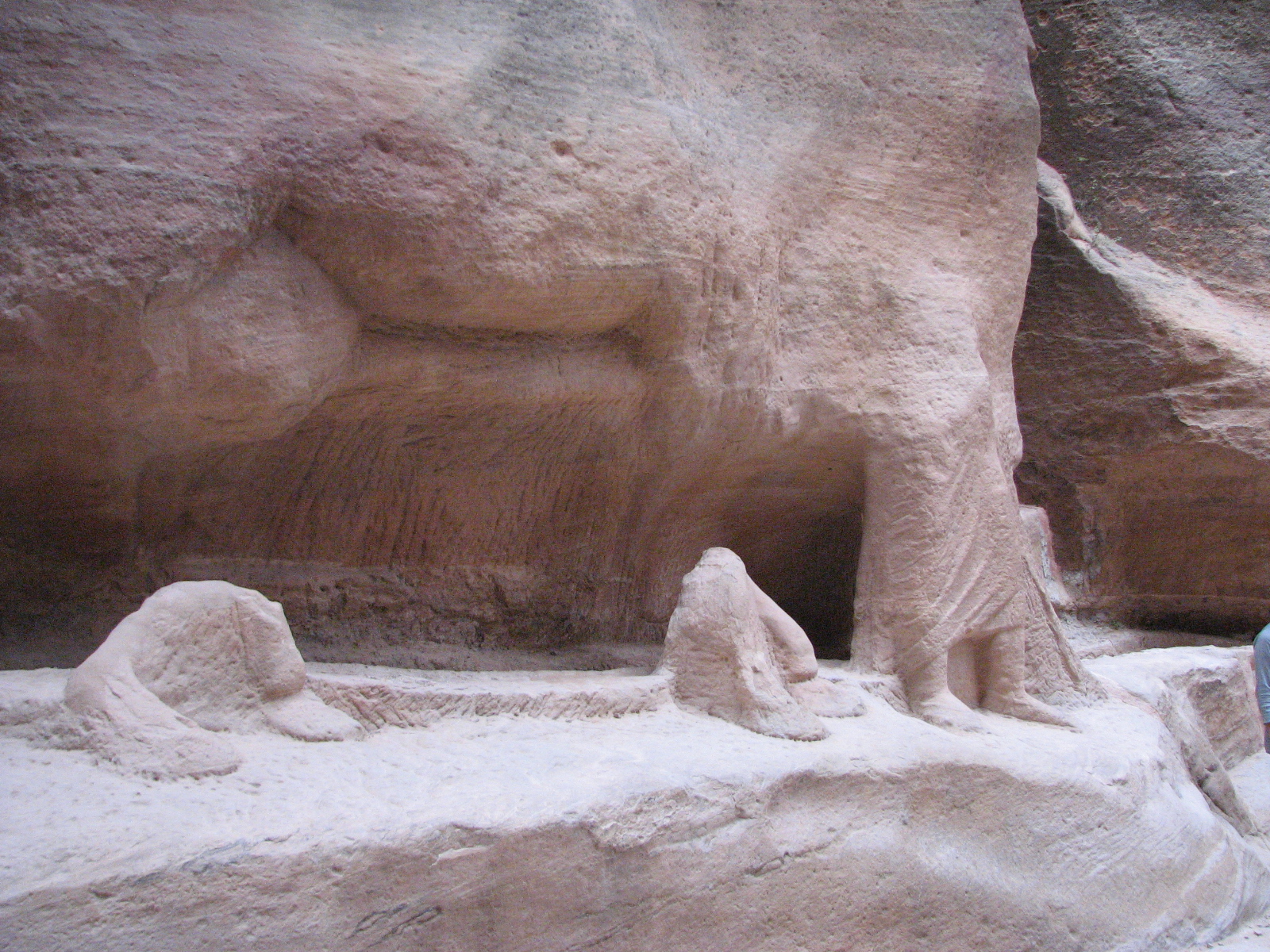
The Nabataeans had begun as nomadic Arab Bedouin herders, following their goats and sheep to wherever they could find food and water. They were used to the harsh desert life but it was their long learned ability to find and control water that led to the rise of the desert city becoming an artificial oasis.
Enclosed by towering rocks and watered by a perennial stream, Petra not only possessed the advantages of a fortress but the Nabataeans controlled the terrifying flash floods in the area by developing dams, cisterns and water conduits. These innovations stored water for prolonged periods in times of drought and enabled the city to prosper from its sale.
This ingenuity led to Petra becoming the hub of the ancient trading routes which passed through on the way to Gaza in the west, to Bosra and Damascus in the north, to Aqaba on the Red Sea and across the desert to the Persian Gulf. From the 7th century BC to the 2nd century AD these routes enabled the trade of Arabian frankincense and myrrh, Indian spices, precious stones, pearls, ebony and silk and African animal skins, feathers, rare woods and gold.
The Nabataean Kingdom thrived from the 4th century BC until the Romans arrived building even more spectacular forums, tombs and theatres in AD 200. But travel was changing and sea routes became more accessible, leaving Petra behind as it lost its importance as a hub for land routes.

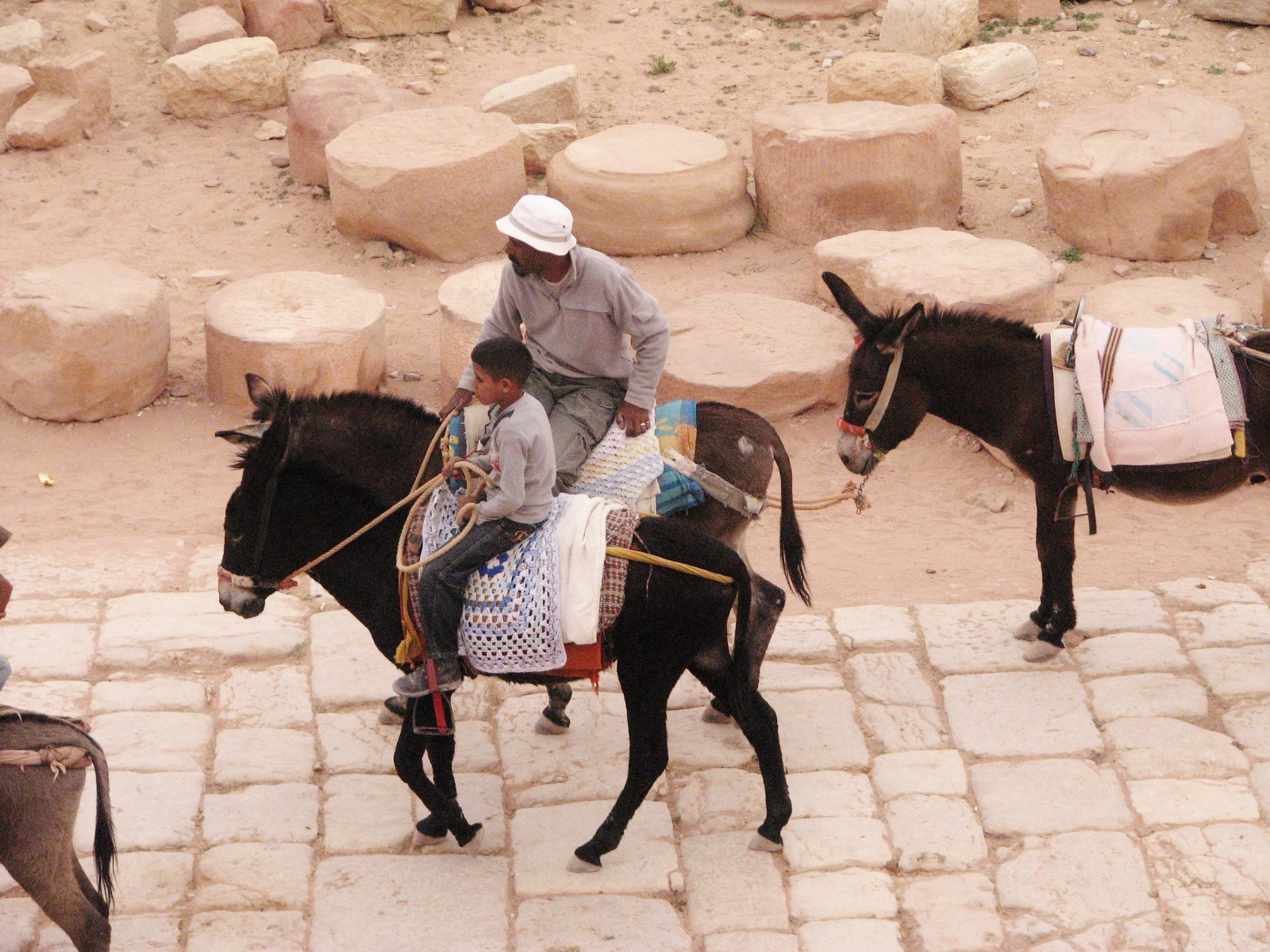
Very little is known to us about the following years, but there have always been Petra Bedouins or B’doul which is the name of their tribe, living in caves in the vast area of this ancient city.
They are descended from the Nabataeans and although they were resettled from their cave dwellings by the Jordanian government in 1985, prior to it being designated a UNESCO World Heritage Site, Petra is their home. There are many who decided to retain their lifestyle as much as possible and stay in the valley in their traditional caves, making a good living as guides for hot, thirsty tourists.
 TRAVELS PAST & PRESENT