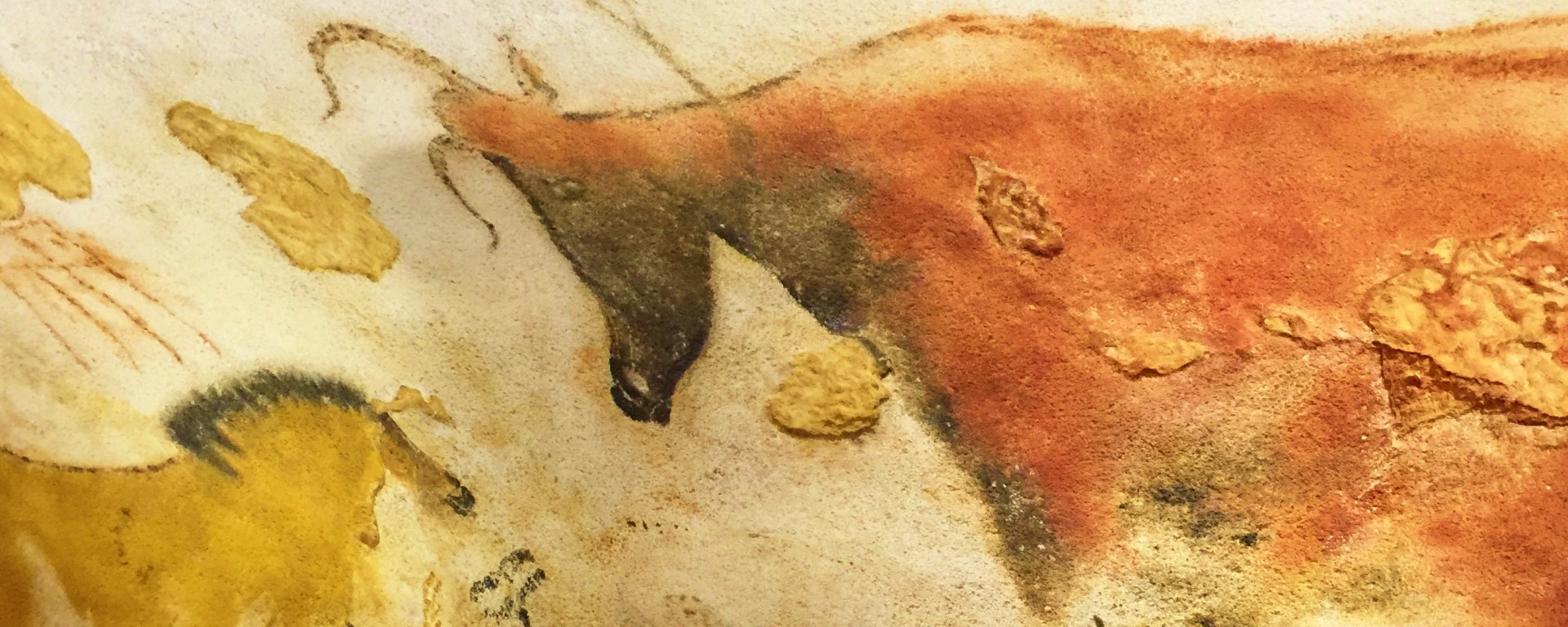
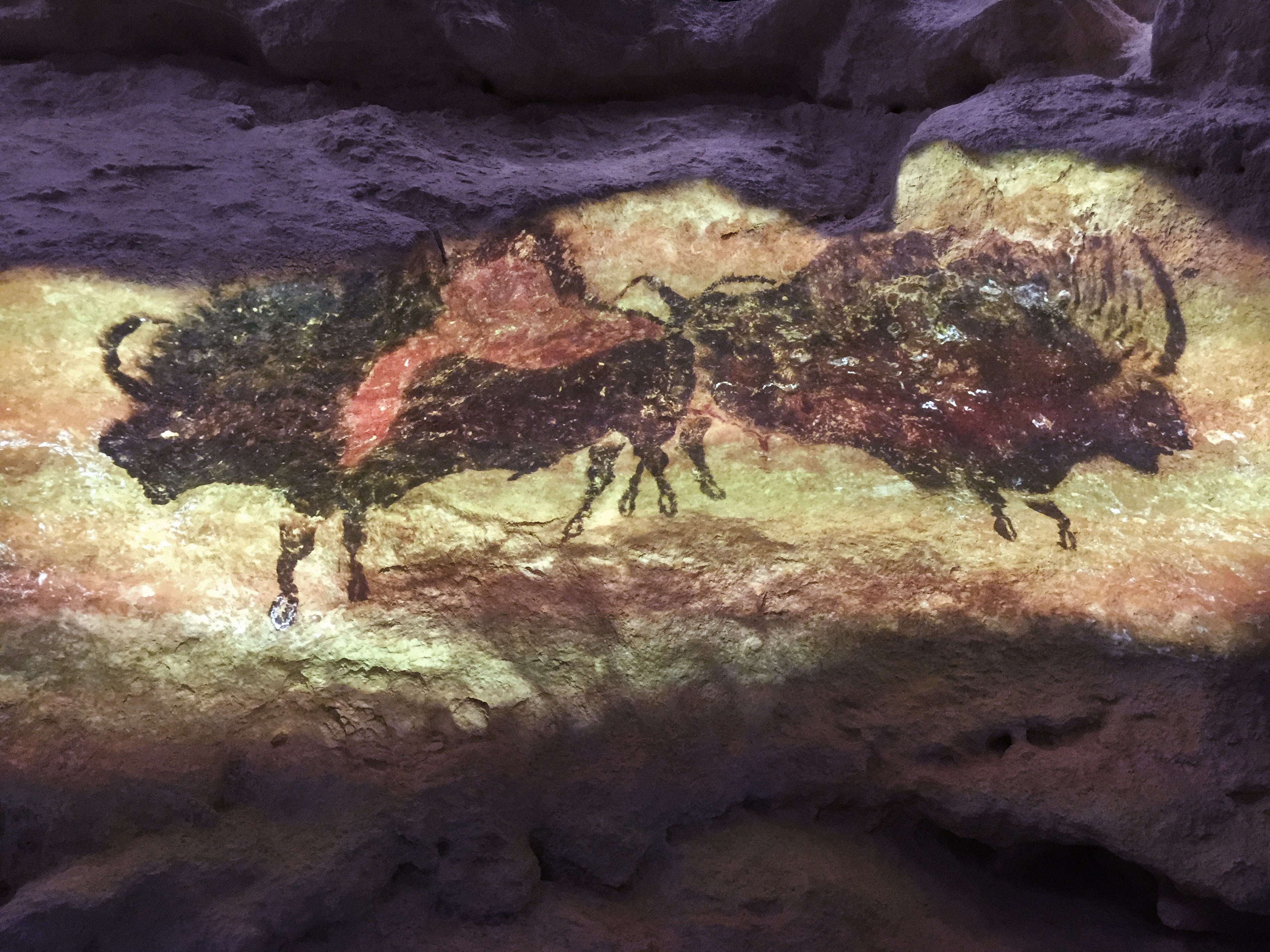
In 1940 a couple of boys were playing with their labrador, Robot, in the hills around Montignac, Dordogne, France when the lab disappeared down a hole. When the boys went after him they came across a huge cave covered in monumental rock paintings of bulls, auroch, bison, deer and horses covering every usable space across the walls and on to the ceiling. The animals are running and they are huge, one of the bulls measures 5.2 metres long and many of them two metres above the floor.
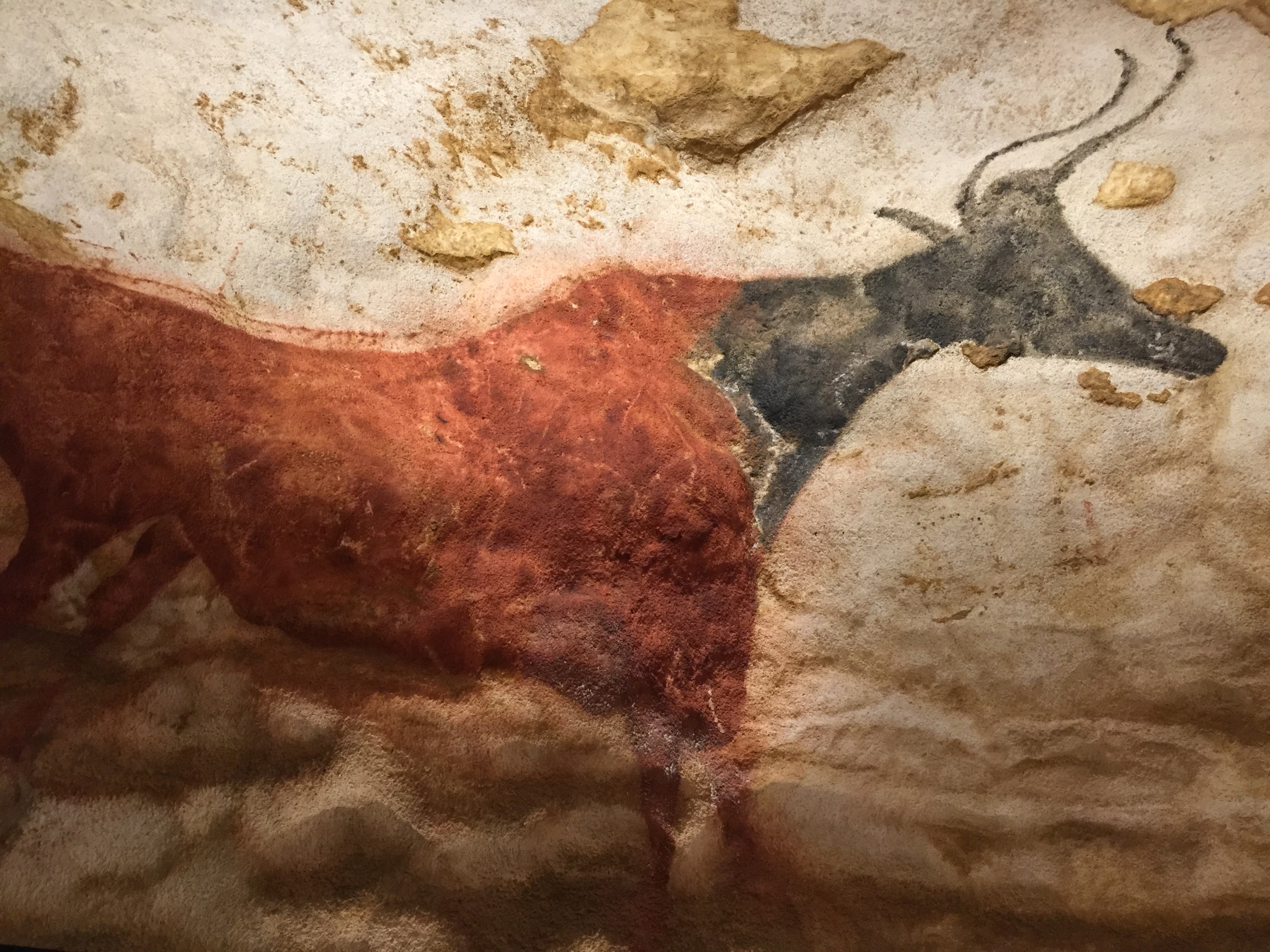
18,000 years ago Palaeolithic communities of hunters from the late Solutrean (22,000 – 17,000 years ago) and very early Magdalenian (17,000 – 11,500 years ago) period who had among them groups of breathtakingly talented artists were looking for somewhere to worship their gods. This hole in the ground was perfect, about 3,000 square metres but only 6-20 metres deep. Using small hollowed out stones filled with a wick and animal fat as lamps, flint stones for engraving, brushes made of hair they set about their work.
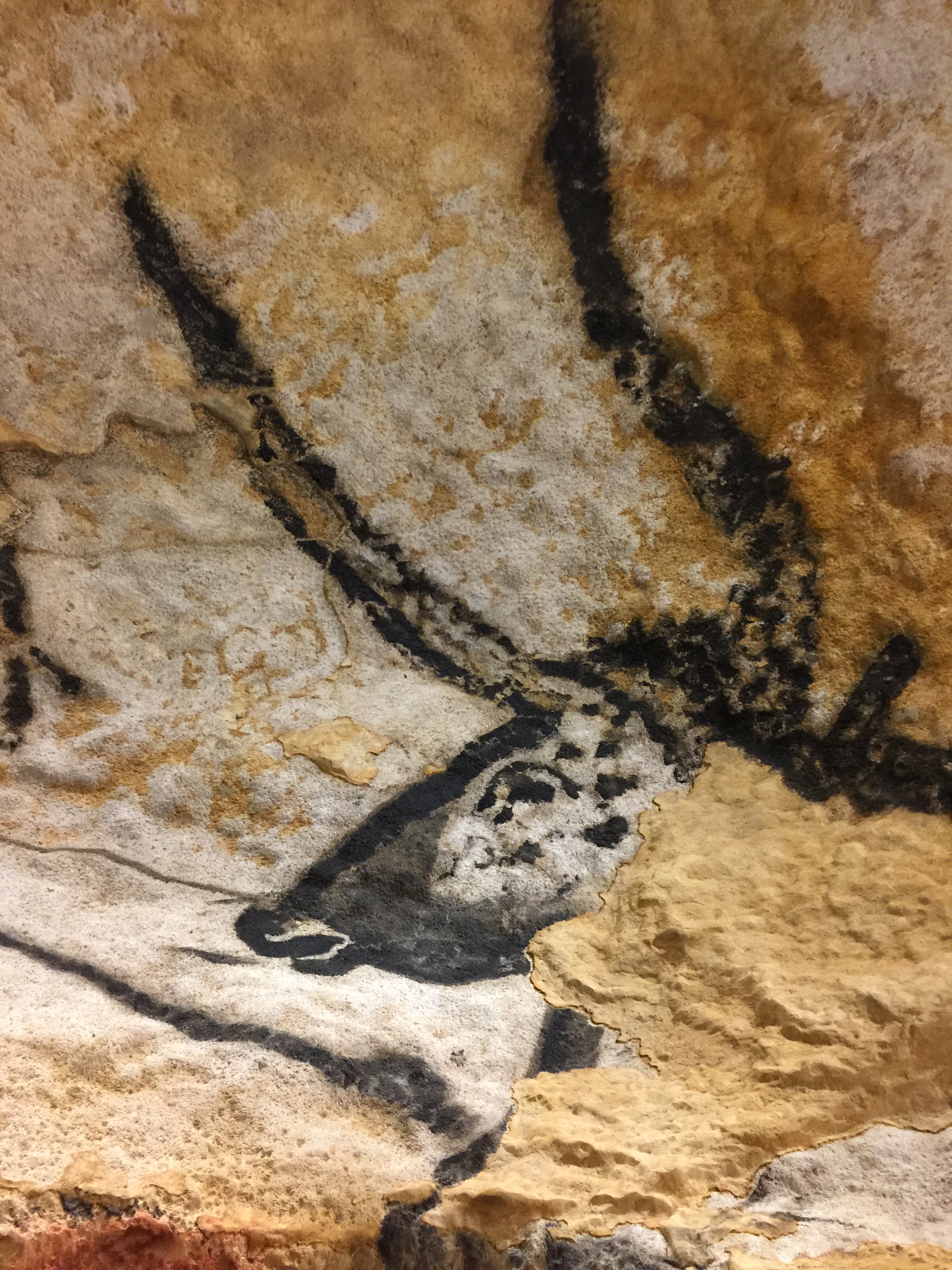
The artists used various techniques, drawing, engraving and painting. With the magnificent earthy colours of iron oxide, manganese oxide, kaolin and charcoal used to give the animals three dimensions, highlights and shadows. Sometimes pigment was blown to give a soft finish, sometimes using a stencil and other times a brush was used. The white calcite walls contrasting against blacks, greys, reds, browns and yellows and perspective given by fading the further away animal and leaving a faint gap between the two. The natural curves of the cave used to accentuate large animals.
Hundreds of pink sandstone lamps have been found throughout the cave as well as long decorated spear points made from reindeer antler. The spear points decorated with the same geometric signs that can be seen in various parts of the cave. There were many flint tools – blades and flakes used for engraving also found among palettes of minerals at the base of artworks.
The reason we were able to wander along this vast cave breathing humidity into the air, with lights shining and shoes on is that the fantastic French have built a complete replica of the original. By 1963 the cave was closed completely to control the mold which was starting to damage the walls. It was clear that the caves couldn’t be just closed off to us non academics, UNESCO listed Lascaux as a World heritage Site and somehow it needed to be preserved. So, using laser scanners of the original cave and digital images of the artwork the entire complex was rebuilt, life-sized in concrete and resin. Artists have meticulously reproduced the paintings and etchings and the public can see and experience what looks and feels like the original caves as part of a guided tour. It is truly mindblowing and as you wander through the cave you very quickly forget that you are in a facsimile.
 TRAVELS PAST & PRESENT