
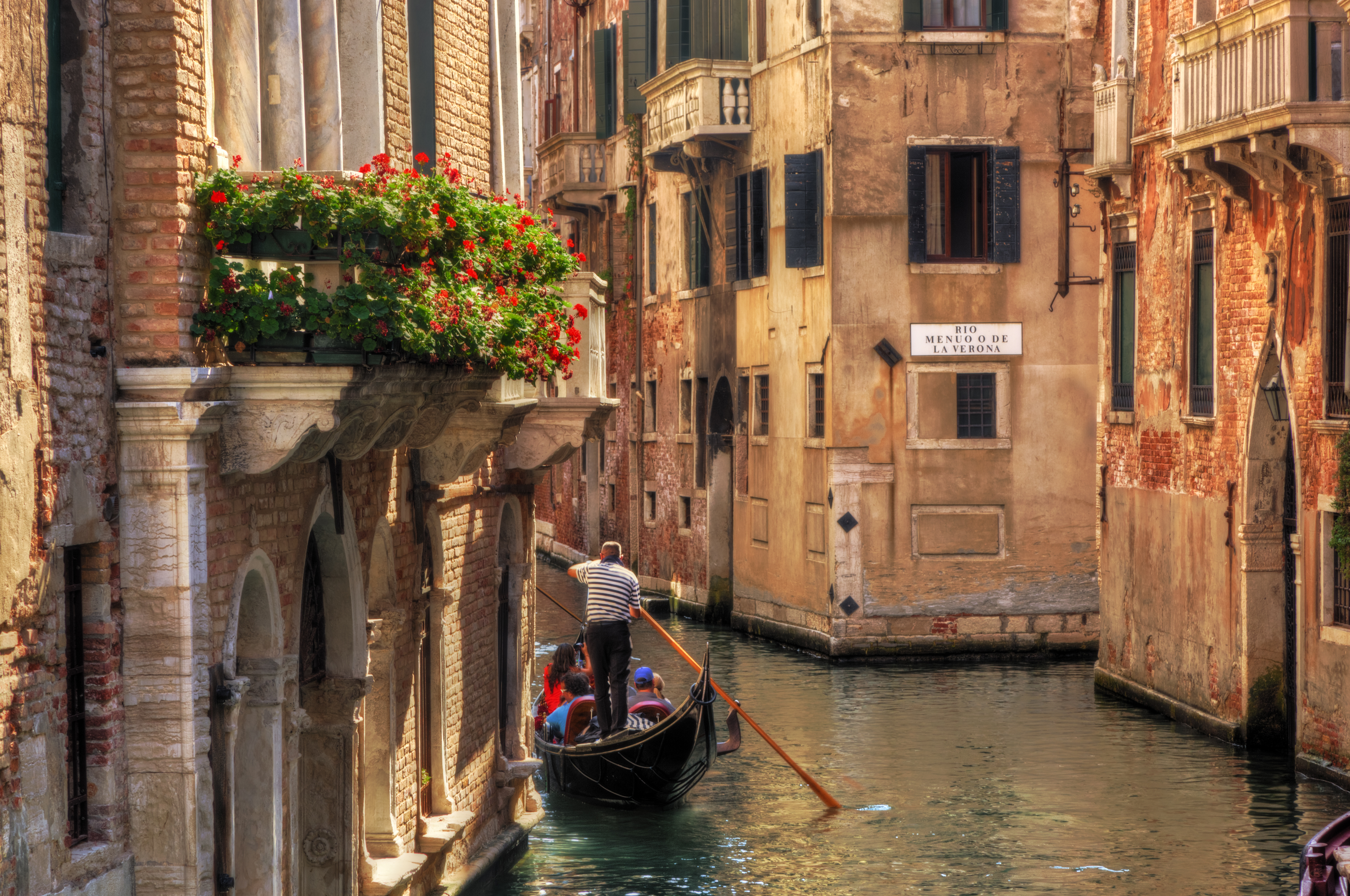
Venetians have been moving about their watery city in gondolas since the eleventh century. These beautiful boats have flat bottoms which make them ideal for use in the shallow lagoon and canals.
“A gondola is always black, is 10.85 metres long, has a beam of 1.40 metres and weighs about 700 kilograms. In the 1500s an estimated 10,000 gondolas of all types were in Venice; in 1878 an estimated 4000 and now there are approximately 400.”
Although nearly all the gondolas you see in Venice are for tourists, there are several spots along the Grand Canal where a traghetto gondola picks up mostly local passengers who remain standing and are quickly and expertly taken across to the other side. Traghetto is the word for ferry and these ones are plain, with no decoration and operated by two gondoliers.
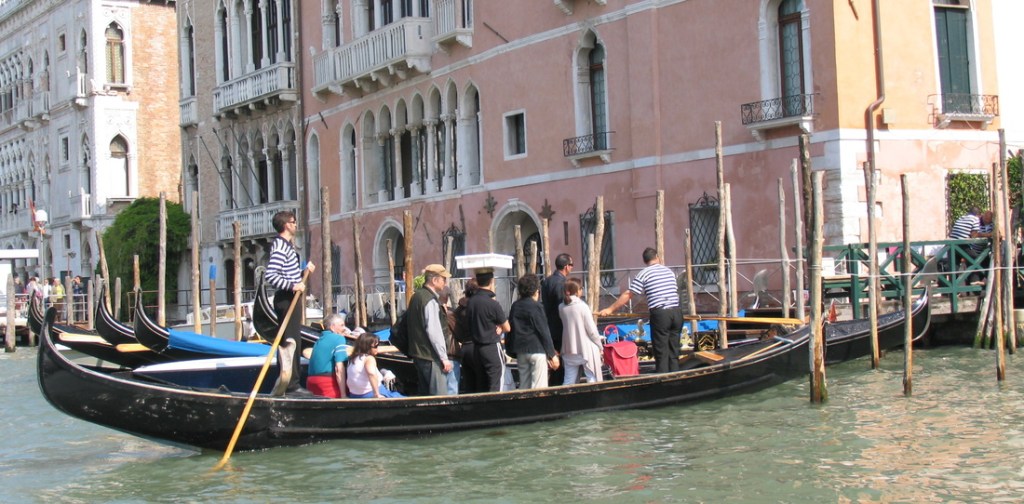
Gondoliers, who usually come from a family of generations of gondoliers, are highly trained in their knowledge of Venice and her history and in the skill required to manoeuvre around narrow canals, under bridges at low tide, take right-angle turns, make slow or sudden stops, go sideways or backwards – without changing position.
The slightly lopsided curve of the hull – the degree of curvature based on the weight of the gondolier – and the fact that he sculls only from the right hand side, ensures that the boat doesn’t go round in circles.
It takes about a year to build a gondola as they are still built by hand using ancient methods using around 280 wooden pieces from a variety of wood including oak, fir, walnut, cherrywood, larch, elm-root, and limetree.
Gondolas are built and repaired in a boatyard called a Squero, there are only a couple of these fascinating yards left in Venice these days and they are manned by busy, working craftsmen with no time for tourists – in the nicest possible way! However you can gain a glimpse from across the canal next to the Church of San Trovaso to see a little of the Squero San Trovaso.
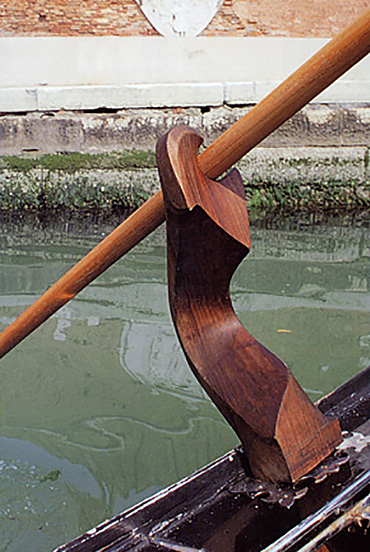
The Fórcola – the oarlock used for holding the oar in place – is carved individually out of walnut for each gondolier depending on his (or nowadays her) size, rowing style and whether it will be used for work, recreation or for regattas.
In early paintings, the gondola often had a cabin called a felse which was useful in the winter or during the night. It came with a burner. The felse was used to protect the passengers – mostly nobility – from the cold and from prying eyes. I suspect that these little hidden cabins were used for all sorts of liaisons over the years until they disappeared in the 1950’s.
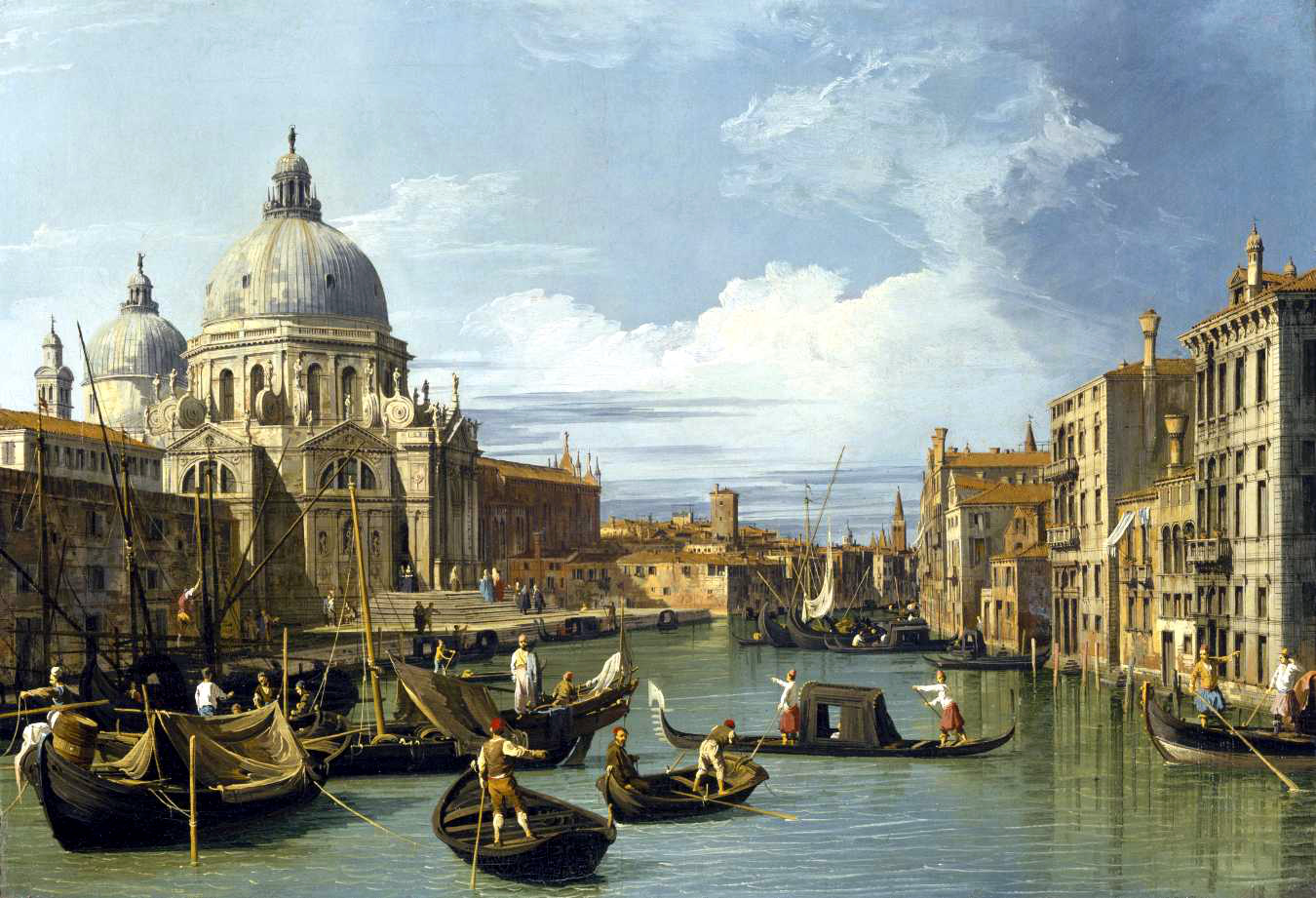
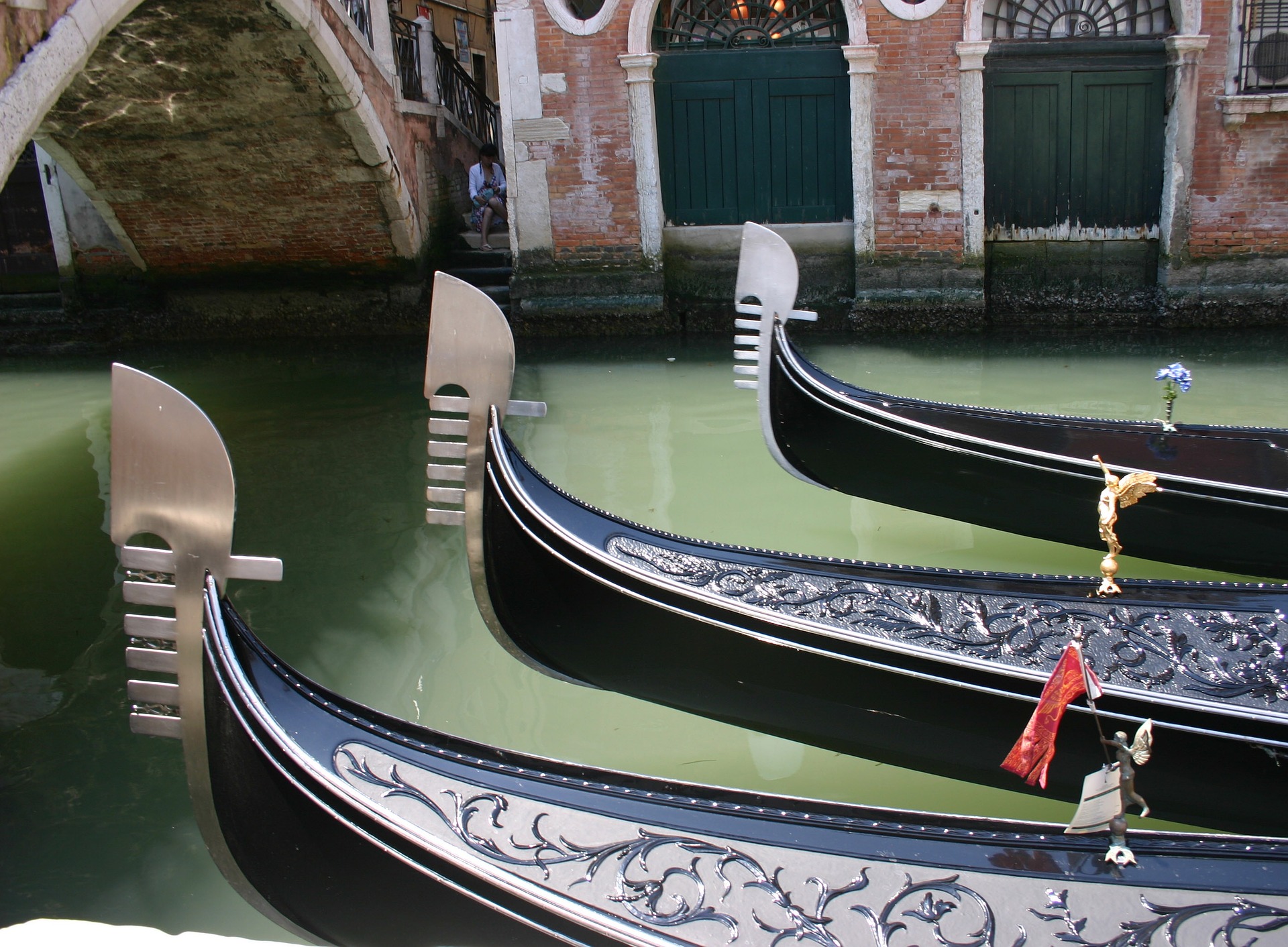
The fero on the bow is mostly decorative on the modern gondola although it was used as a counterweight originally. It represents the City of Venice with the doge’s hat at the top and the six sestieri or districts underneath: Cannaregio, Castello, Dorsoduro, San Marco, San Polo and Santa Croce plus one facing backwards which represents Giudecca.
Here are a few links for more information about these magnificent boats.
Venetoinside:
You can book a gondola ride on this website, or just wait until you are in Venice, the gondoliers are everywhere
The History of the Gondola:
An interesting site with plenty of fascinating history
The Tramontin Gondola Makers:
A beautiful site for this family of gondola craftsmen
Squero San Trovaso:
The San Trovaso squero which you can see from a distance
The Royal Gondola:
A magnificent gondola for you to hire for your Venetian wedding
Le Forcole:
The craftsmen who make the oarlocks
The Art Foundry:
The artists who cast the brass mythological figures on a gondola
 TRAVELS PAST & PRESENT