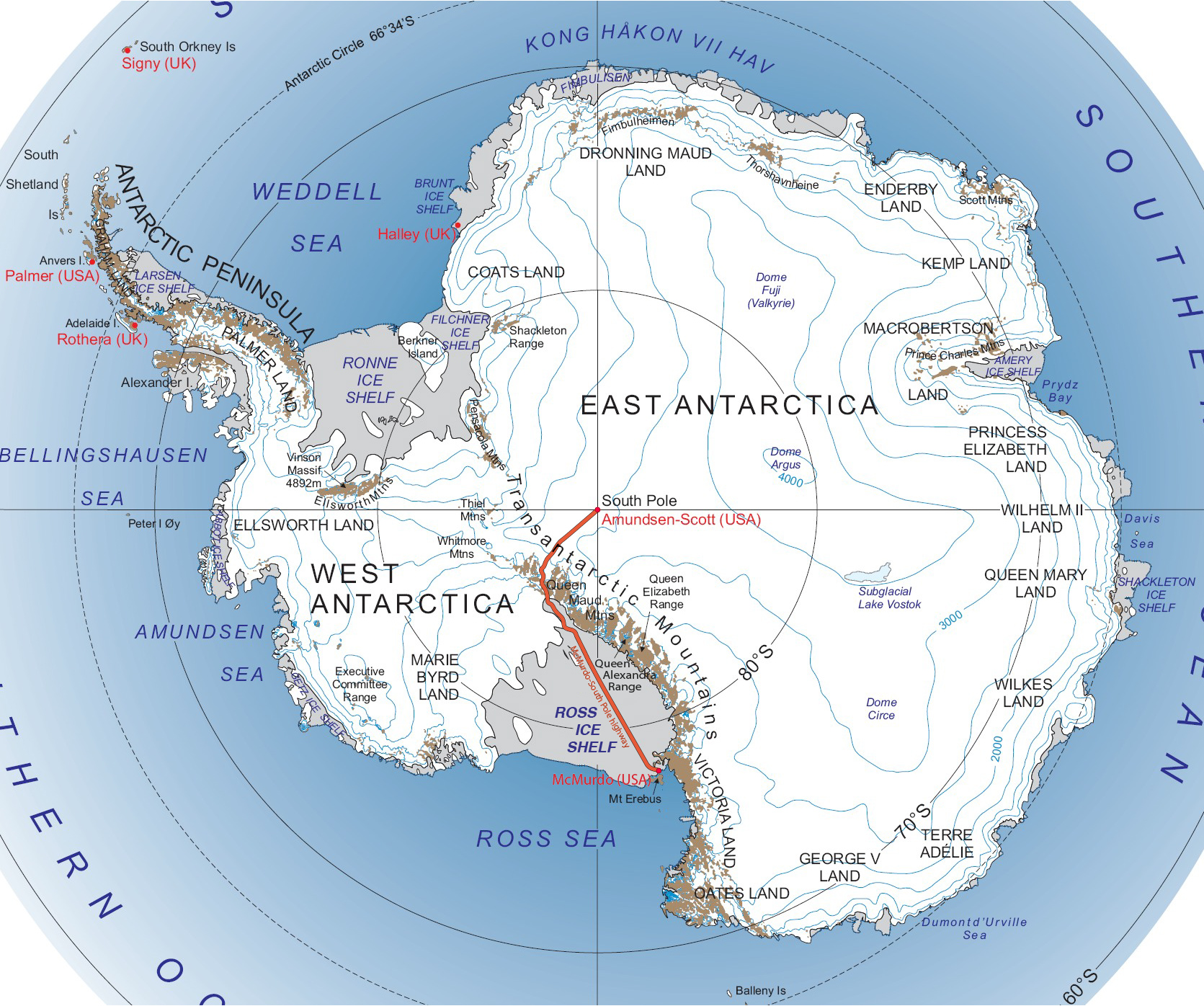
We had been at sea for about three weeks, leaving Ushuaia, Southern Argentina to head across the fierce Drake Passage, down the Antarctic Peninsular, across the Amundsen Sea and into the Ross Sea.
It was now daylight 24 hours a day and we were in our best dresses, lipstick and all after the Captains dinner on board our ice strengthened expedition ship Marco Polo.
It was a peculiar feeling to come out on deck late in the evening with sunglasses on having just eaten a sumptuous dinner finishing with a Cointreau. But there was something we needed to see….
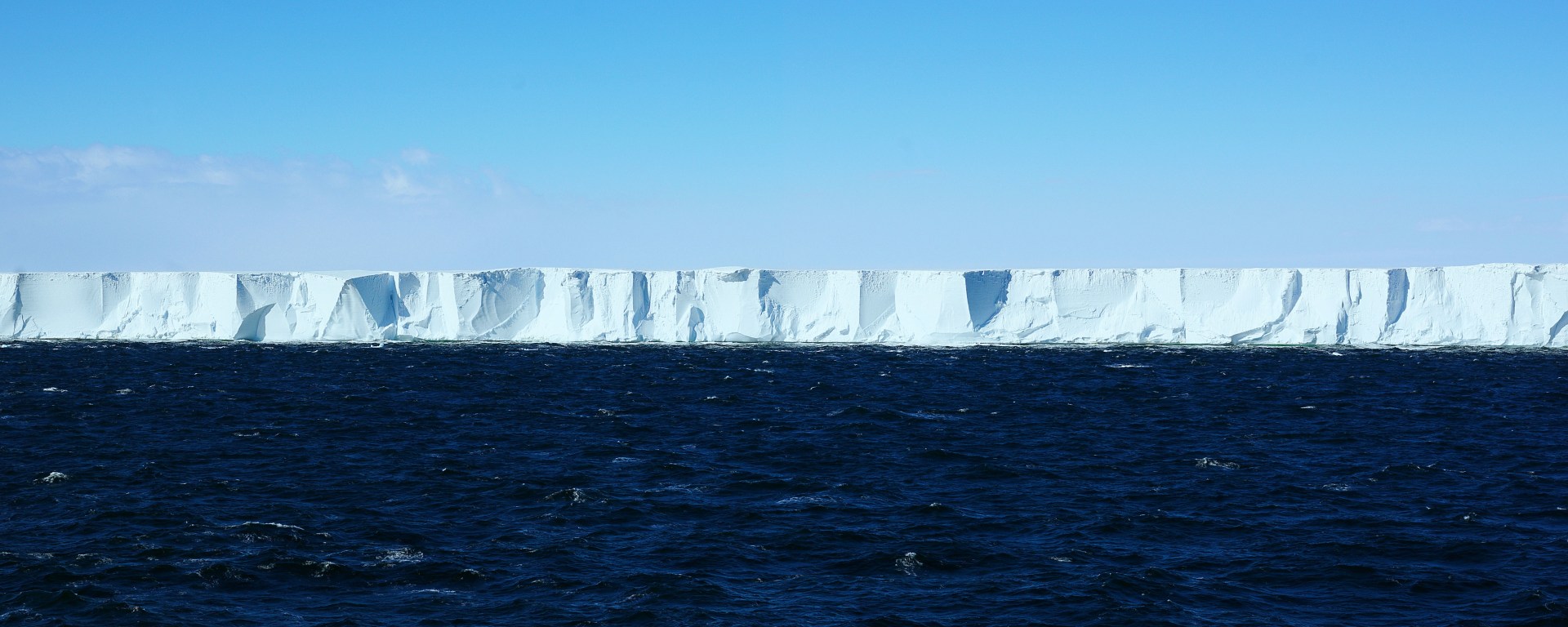
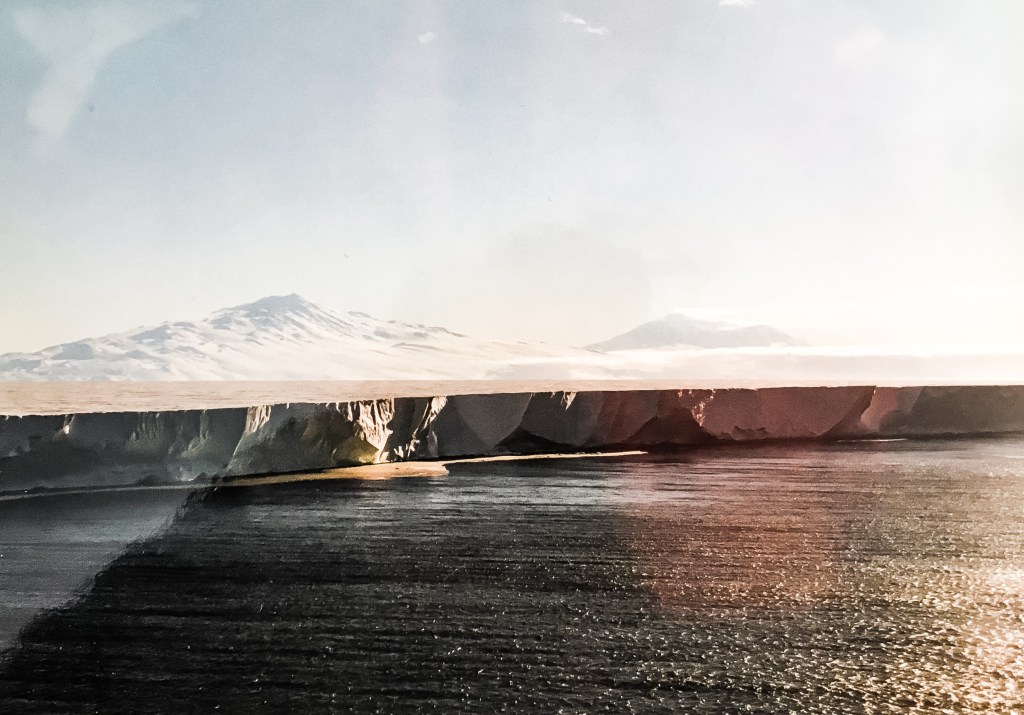
We were right alongside the Ross Ice Shelf. What a sight! The low sun on the 50m high, vertical white wall of ice against the deep blue sea was from another world. Formed as a massively thick platform of ice where a glacier flows down to the sea, the face of the shelf ran off into the distance as far as the eye could see, 600 kilometres – impossible to relate to really, and not only that, the massive ice cliffs we were looking at were only the ten percent that is above sea level the other 90% is under water!
In the distance beyond the ice were the two mountains Terror and Erebus named by Captain Sir James Clark Ross after the three masted wooden ships in his expedition when he discovered the Ice shelf in 1841.
Erebus being the site of the 1979 Air New Zealand disaster when all 237 people on board perished was of particular significance to me as my father, an antarctic explorer from the 1957 Commonwealth Trans-Antarctic Expedition had been the commentator on board.
in 1912, Captain Robert Falcon Scott, Lieutenant Henry Bowers and Doctor Edward Wilson perished on the Ross Ice Shelf while making their way back to McMurdo Sound from the South Pole. This is the largest piece of floating ice on the planet – about the same size as France and it is slowly being pushed out to sea at the rate of about three metres a day. So these amazing explorers are now slowly moving towards the edge of the shelf and by 2250 will be part of an iceberg that will have calved off and floated into the Ross Sea. Luckily ice shelves make more ice all the time, so they will be under about 100m of ice. I think they will be very satisfied with their continuing exploration.
 TRAVELS PAST & PRESENT