I have just been back to Rajasthan, India for the first time since I stopped importing old architectural pieces and handcrafts from this wonderful desert state. It doesn’t seem that long ago that I was making this regular trip but the country has changed so much. Planes used to be crowded out with very traditionally dressed servants with televisions and appliances as their hand luggage – importing such things was restricted – so the fast growing middle classes would send their servants to Hong Kong or Singapore to buy them extra bits and pieces. A free trip overseas and all the whisky you could drink! The poor cabin crew! Now you buy all your appliances at the local market.
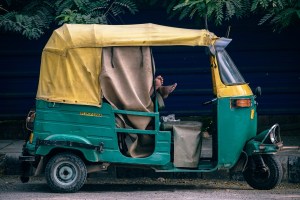
Gone is the old Ambassador car with a taxi driver sleeping in the back seat, an old towel wrapped round his head, driving you to the airport at midnight with no lights on so he didn’t waste the bulbs. Now you just call Uber and a brand new electric Hyundai glides up to the kerb. The new tuk tuks might look much the same but they are also electric!
Plastic bags have been banned in the whole country. 1.3 billion people and no plastic bags. Astounding. No plastic bags anywhere.
Anyway, the reason for my much anticipated journey, was to attend the wedding of an old friend’s daughter at the palace in Ranthambore, Rajasthan.
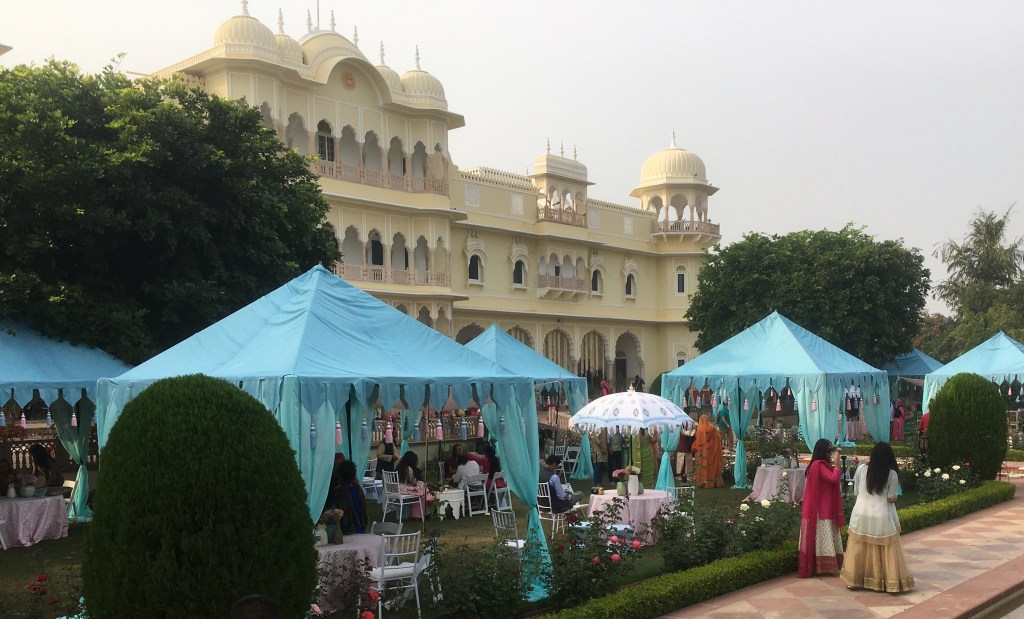
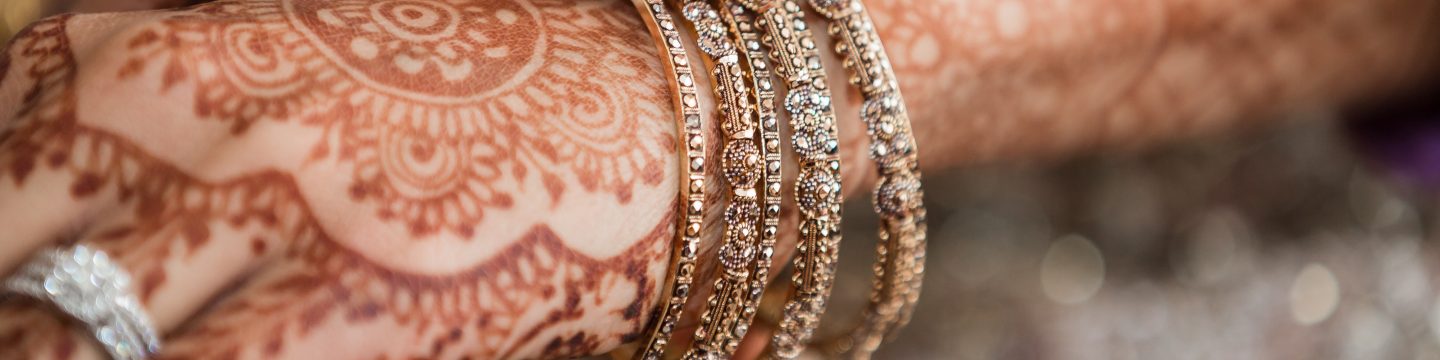
During the garden party the day before the wedding all the women guests were able to have their hands decorated with Mehendi or henna. I had always wanted to see these beautiful designs being created so we found a spot under a turquoise canopy and the artist began her magic.
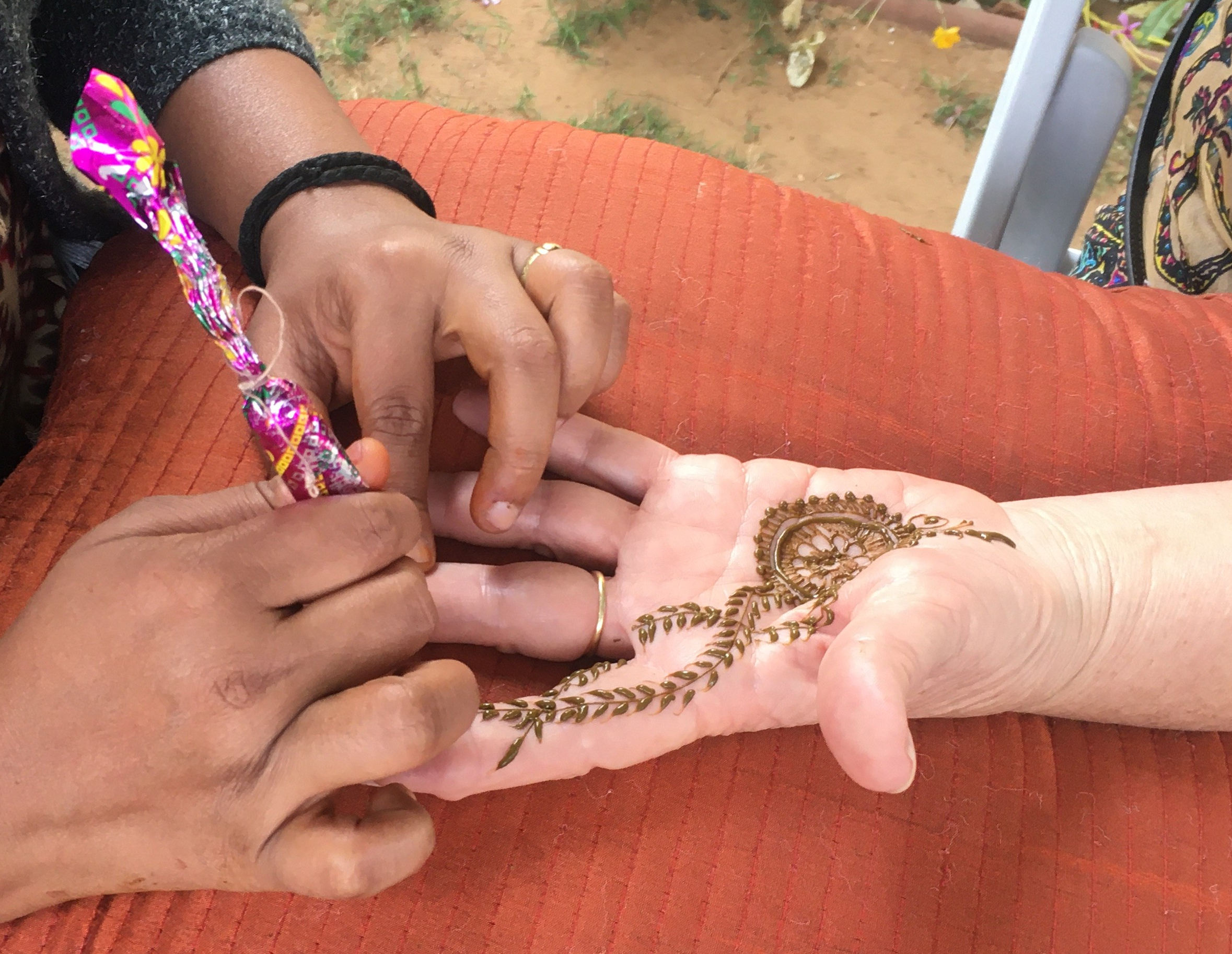
First your palms are decorated with the thick henna paste squeezed out of a little piping bag, this took about twenty minutes, then you are sent off to let it dry with the dilemma of who will hold your wine while you sip it through a straw. The longer the henna stays on at this thick, dark stage the longer it will last, it’s raised and quite crusty like icing. After fifteen minutes and a big slurp of wine she starts on the top of your hands.
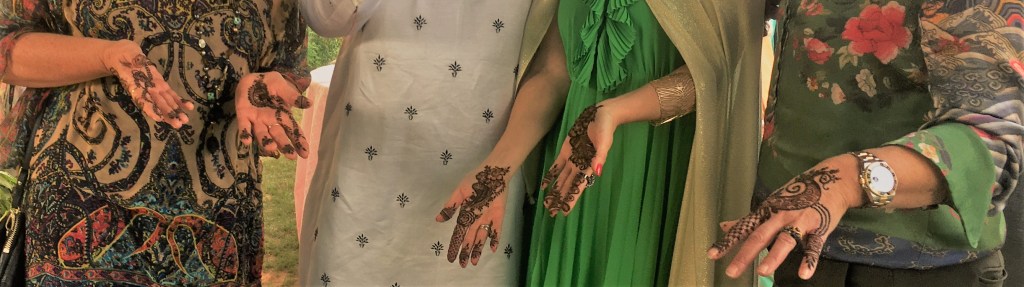
This form of adornment is ancient in India, particularly in Rajasthan and it is considered auspicious for the bride to have her hands and feet decorated with henna and her face and arms painted with turmeric.
Henna is known for its cooling properties and is supposed to calm the bride’s nerves when applied to her hands and feet.
The bride explained to me that these traditional customs are to make her more beautiful. I couldn’t imagine the bride being more devastatingly beautiful than she already was!!
The henna remains for a few weeks but the turmeric is washed off during a pre wedding ceremony.
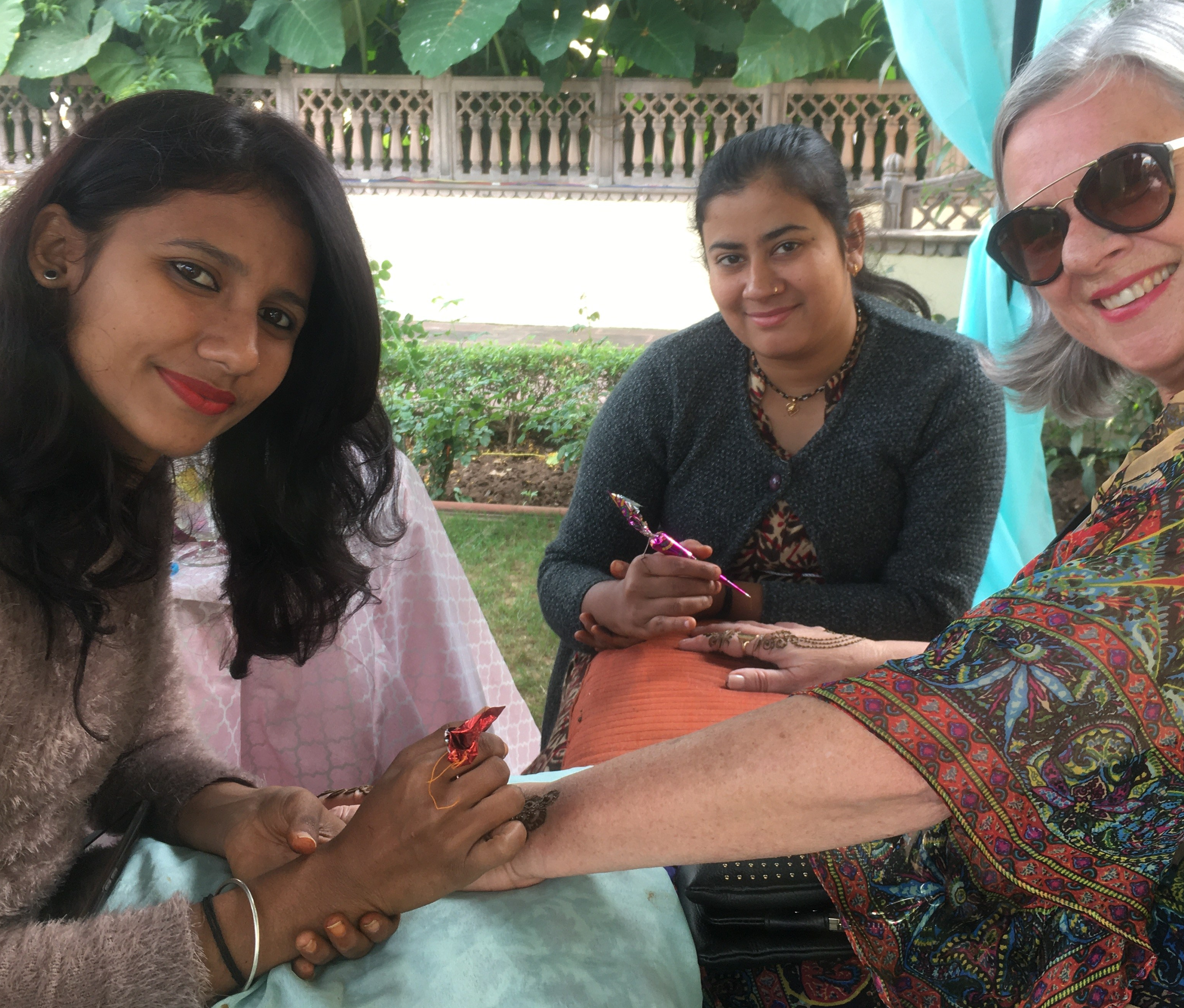
Traditionally, the Mehendi paste is made from dried powdered henna leaves. The leaves are dried in the sun, ground and sieved to obtain a fine mossy green powder, which is then combined with water, lemon juice and drops of eucalyptus oil, then mixed till a smooth paste is obtained.
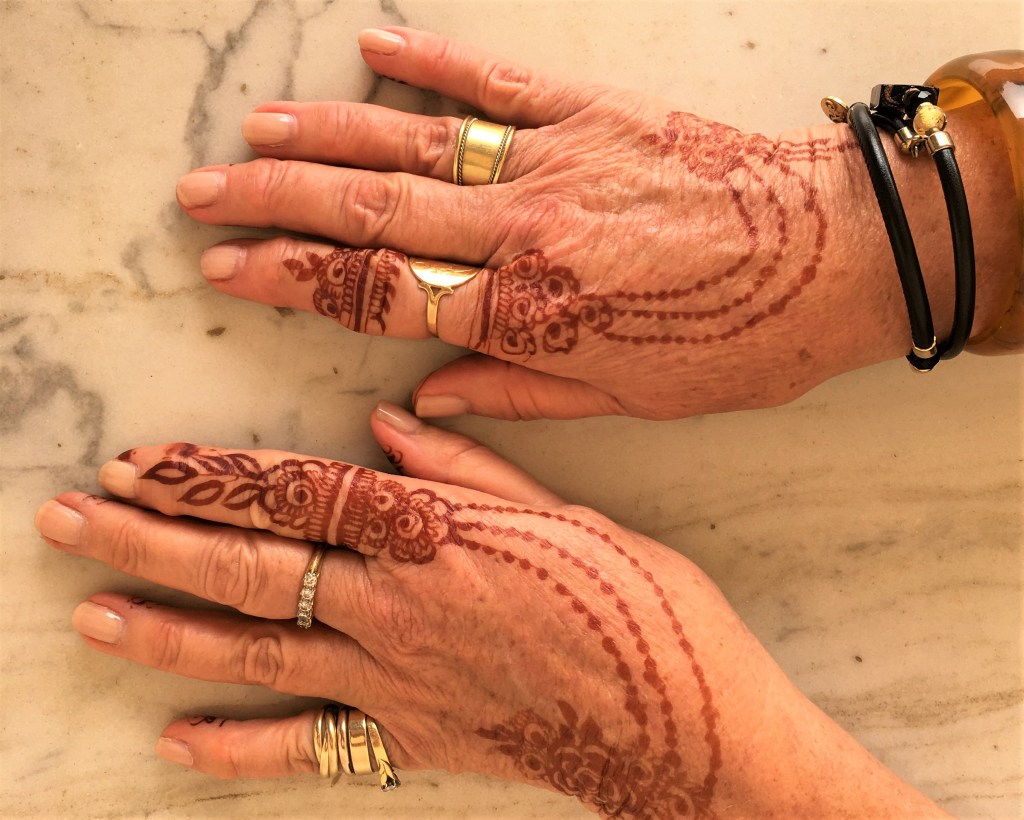
After the dark henna has completely dried it crumbles off – all over your bed – and leaves behind the beautiful rust coloured pattern. Don’t wash the artist said to me…..at least I didn’t have to do dishes, I wanted it to last until I got back to New Zealand, but hair washing and showers took their toll and there was only a hint left when I got home.
 TRAVELS PAST & PRESENT