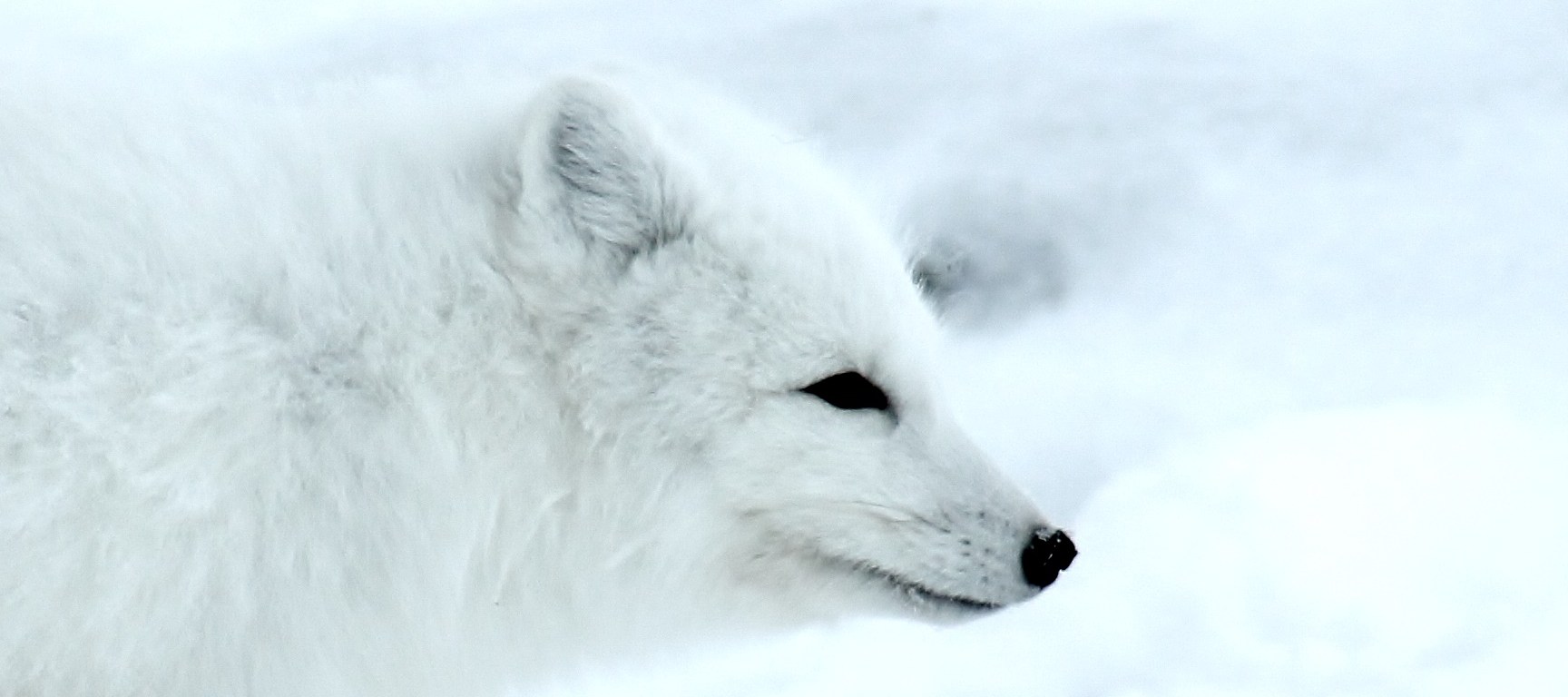
A cheeky, supposedly friendly arctic fox ran up to me as soon as I stepped out onto the snow after the hour long flight from Churchill, Manitoba. We had finally arrived at the arctic circle on the edge of Hudson Bay and I had to remember this was a wild animal looking for food. Cute but mean and an opportunist when it came to dinner.
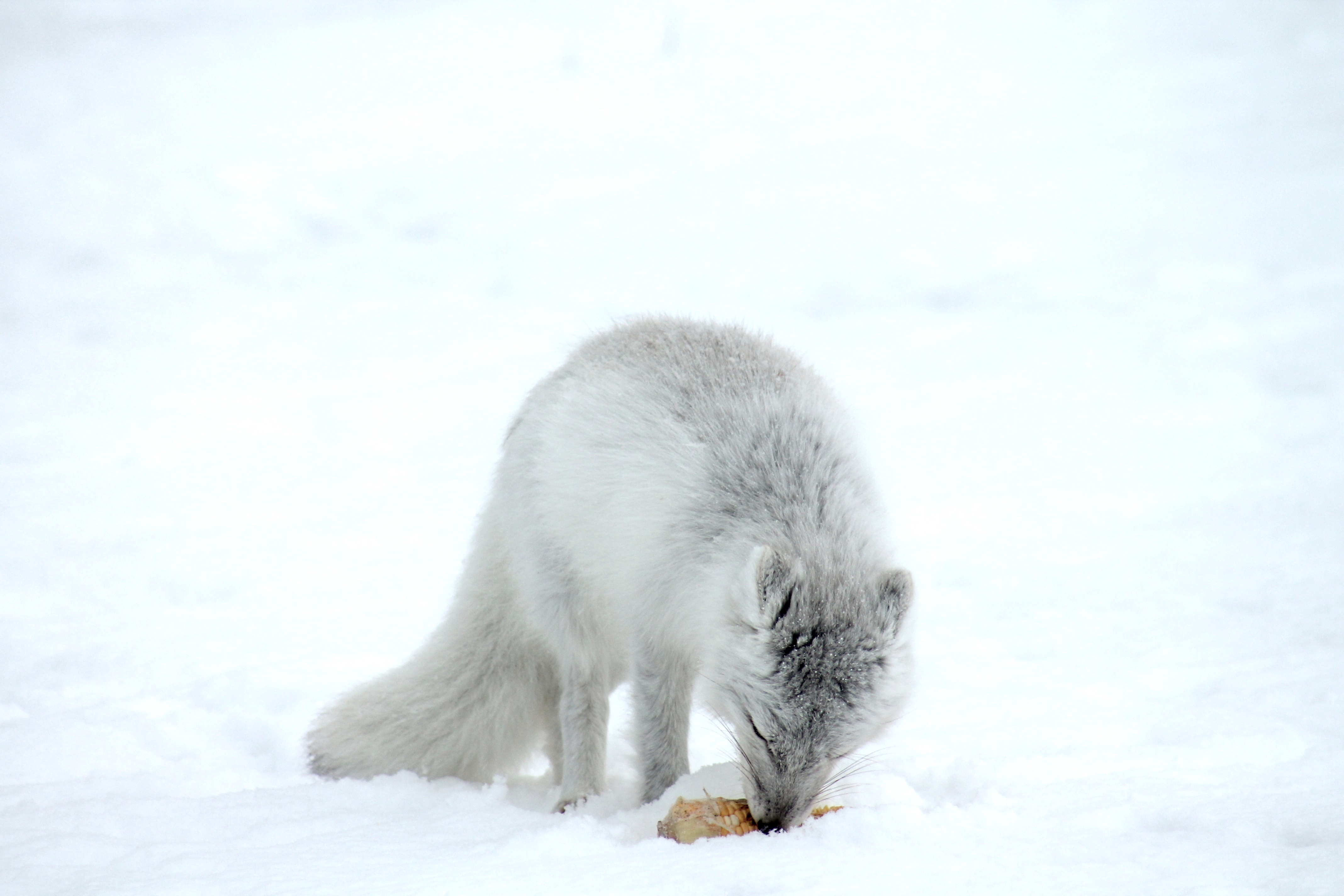
Arctic foxes are supposed to be carnivores and scavengers but they also eat berries and seaweed, so they are really omnivores. They hunt various rodents and birds and are accomplished bird-egg predators consuming eggs of all except the largest tundra birds. In the warmer months when food is overabundant, they work hard to increase their store up of body fat increasing their body weight by about 50%. Any surplus food is buried as reserve, but during winter when food becomes much more scarce, the foxes will often follow polar bears around and scavenge what they can off a kill once the bear has finished. Even although polar bears are natural predators of the Arctic fox along with golden eagles, wolverines, wolves and grisly bears the ones around our camp were completely ignored by the polar bears. I guess they weren’t hungry enough.
In Iceland, arctic foxes sometimes take lambs from sheep flocks with the result that farmers have been encouraged since the late thirteenth century to kill these predators in order to protect their livestock.
Arctic foxes have the warmest pelt of any animal found on the tundra which enables them to maintain a consistent body temperature and survive quite happily even when the temperature drops down to -70 degrees Celsius.
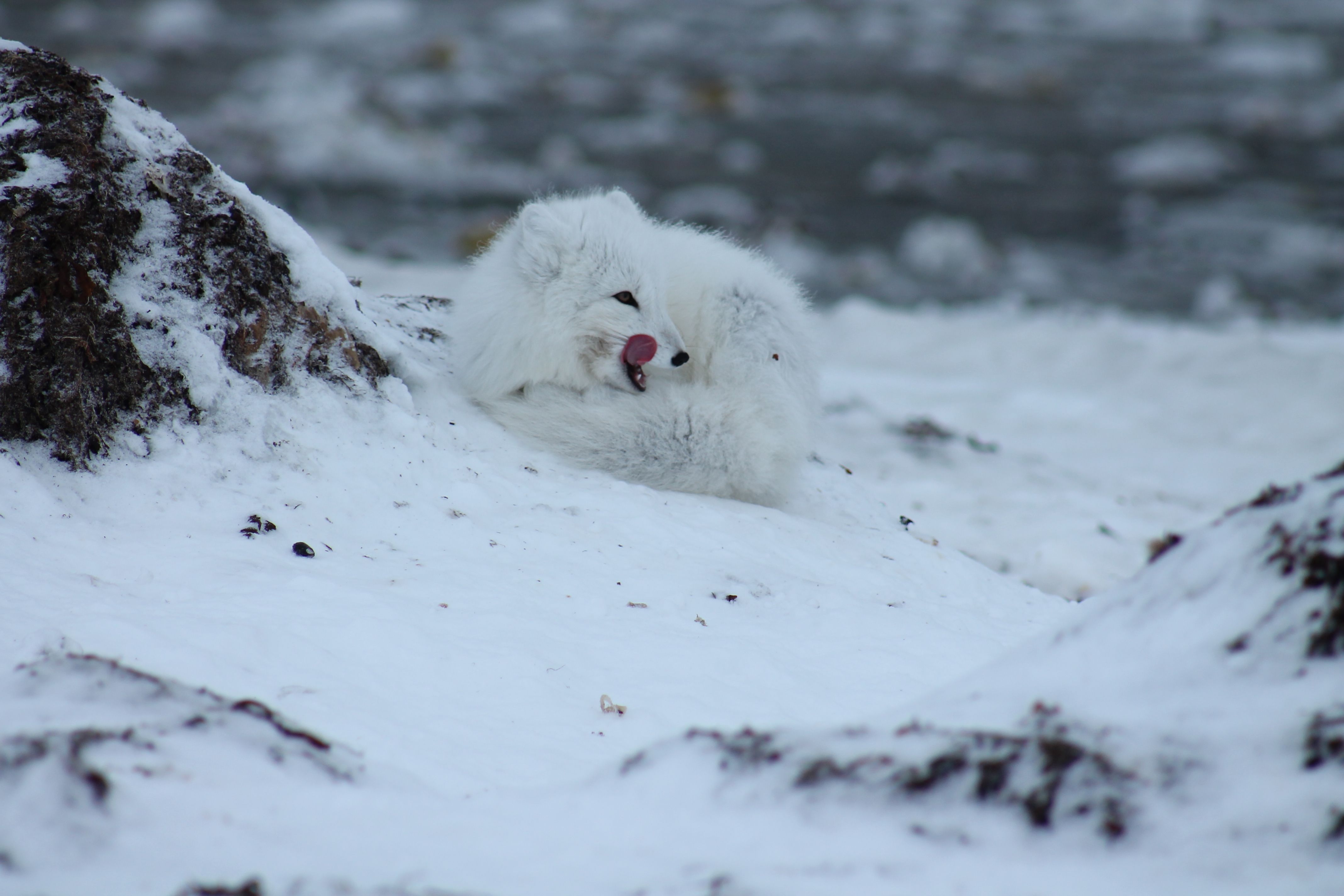
Plus, their short legs, short muzzle and rounded ears all reduce the amount of surface area for heat loss, they have a very long tail with a thick covering of warm fur which they wrap around their body when they sleep and like polar bears, the underneath of their feet are covered in fur. If it does get any colder than minus 70 they very cleverly increase their metabolism which warms them up.
For the sake of camouflage in the summer these little snow white fluff balls change in to a brown coat or black coat. Some of the ones around our camp were still quite dark coated as the winter was just starting to get into full swing.
The fur of the Arctic fox is prized by the fur industry and they have been intensively trapped and farmed for their fur in some areas of Alaska since the mid 1800’s. They have always been important to the economy of the native people living withing their range. Nevertheless, populations have remained relatively stable.
Foxes don’t hibernate but if the weather is too extreme even for them, they head underground to frost free tunnels and dens which have probably been in existence for many decades and used by many generations of foxes.
In the middle of the year pups are born and raised in these dens with both parents working full time to feed and care for the family of anything up to 15 young.
The rest of the year they are mostly solitary thank goodness – a pack of them would be a bit scary – living on the pack ice and tundra.


I’m really enjoying your blog, Robbie. Thanks. It’s wonderful to read about places I’d like to visit, but never will. Your descriptions and photos are awesome
LikeLike